By: Stephanie Lopez, Haverford ’27; Image from CFR
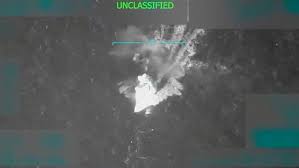
On September 2nd, the U.S. military struck a Venezuelan vessel that allegedly carried illegal narcotics through the Caribbean into the United States. President Donald Trump reported on his social media the killings of 11 “Tren de Aragua Narcoterrorists”, who presumably worked under Venezuelan President Nicolás Maduro. This sudden attack generated controversy and furthered Venezuelan/US tensions, as President Maduro condemned the operation as an act of aggression and a violation of international law that attempted to start a war. The aforementioned vessel attack was the first of 20 strikes reported in the past 3 months.
The largest strike to date was on October 27th, 2025, where 14 people were killed in the Eastern Pacific, according to the Trump administration. The US Defense Secretary Pete Hegseth vowed to “find and terminate EVERY vessel with the intention of trafficking drugs to America to poison our citizens”. However, the administration has failed to provide evidence that these vessels carry narcotics, which raises concerns about the justification to attack foreign boats.
Venezuela and the United States have had pre-existing conflicts, with tensions heightened by other political issues. The re-election of Nicolás Maduro in May 2018 generated additional friction between the governments, as the election’s legitimacy was questioned by the international community. As a result, the US increased its sanctions against the Maduro government, which led to a heavier reliance on Cuban military aid and intelligence. Cuba’s assistance has been of significant concern for the US, with Washington alleging that the Cuban regime undermines democracy and strengthens authoritarian leaders. This conflict ruptured bilateral relations between the countries even before President Donald Trump took office.
However, Trump’s election in 2024 made the American government take a more aggressive stance toward Venezuela. It is no secret that Trump and his administration have constantly criticized Latin American countries due to his hardline position on immigration and emphasis on border security. This strike is just one example of a larger Trump administration strategy to target those they consider narcoterrorists to combat the drug and criminal networks. It is important to note that the US government has focused on Tren de Aragua, a powerful Venezuelan transnational organized crime syndicate, which is on the US Foreign Terrorist Organization list as of February 20, 2025. As written in a letter to Congress on September 4, Trump justified the use of military force against the vessels on the grounds of self-defense.
This international conflict is highly problematic because Trump’s actions are hostile with extremely ambiguous reasoning. As it is unclear how far the White House is willing to defend these attacks, there is growing suspicion that he is abusing his presidential power. Democratic Senator Mark Kelly has expressed doubts about the legality of these attacks, as they have been conducted in international waters with no strong evidence of authorization. In addition, Human Rights Watch Director Sarah Yager has stated, “US officials cannot summarily kill people they accused of smuggling drugs”, which further demonstrates the controversy of the strikes and the possibility that the US government has violated international law.
This extreme approach does not tackle the root causes of drug networks and criminal organizations coming from Latin America. One of the most salient root drivers of these issues is economic necessity tied to poverty. Many marginalized communities lack the basic resources and income to survive, and consequently, are influenced to join the drug market or criminal networks. The destruction of the Venezuelan vessels puts a band-aid on the problem because it does not tackle the poverty in Latin American countries. Trump may view this situation as a temporary strategy to remove Maduro from power, or to accelerate his campaign on border security and stop narcotrafficking, or perhaps both. However, his long-term goals are unclear, and the attacks have further pushed Venezuela to deepen ties with other autocratic allies to defend itself.
In short, these questionable vessel attacks have heightened hemispheric hostility between US and Venezuelan leaders, along with their administrations. Trump’s fierce military strategy to combat drug traffic flows and terrorist groups from Latin America has garnered mixed reactions. There is significant speculation about what will come next and what Trump’s next move will be concerning Venezuela. Only time will tell what further consequences these military confrontations will have and what they mean for these countries’ political climate.