By Atticus Fasnakis, Haverford ’29, image from Latin American Post/EFE
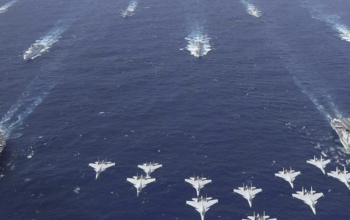
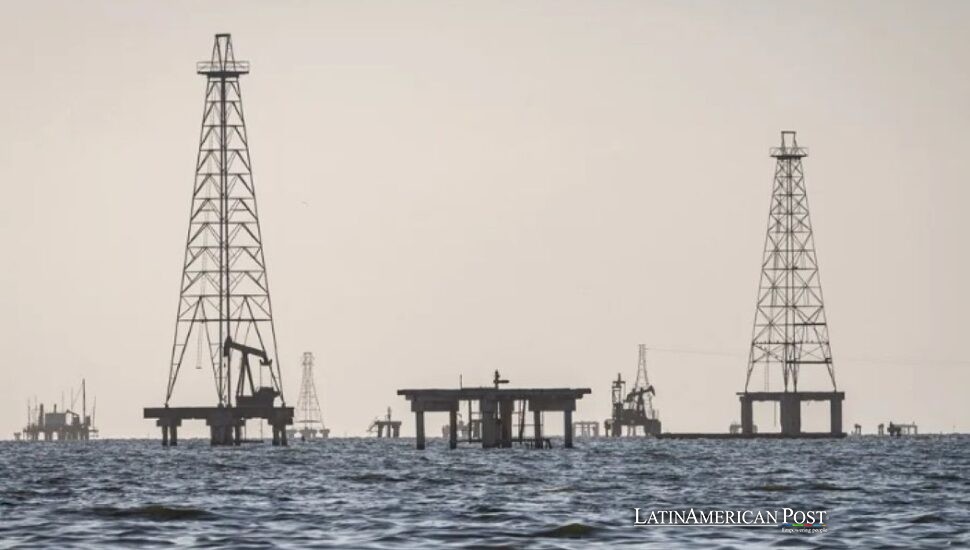
In early December, the United States ordered what it described as a total blockade of oil tankers linked to Venezuela’s government, following the seizure of a sanctioned vessel and an expanded security posture in the region. Oil markets reacted immediately, prices rising on fears of disruption. Legal experts began asking whether the move crossed from economic pressure into something far more serious. In international politics, a blockade is a signal, and signals travel faster than intentions.
Realism begins with a blunt premise: there is no referee in international politics. States operate in an anarchic system where power, not goodwill, governs outcomes. Actions are judged not by stated intent but by perceived threat. A blockade, however carefully justified, is read as pressure backed by force. History suggests that states under such pressure rarely comply cleanly. More often, they adapt, counterbalance, or seek protection elsewhere. Coercion, once applied, has a habit of widening the field.
Oil magnifies this dynamic. Venezuela’s production has declined, but oil markets price risk, not virtue. Even limited disruption, or the fear of it, ripples outward. Tanker interdictions inject uncertainty, and uncertainty lifts prices. That lift does not stay offshore. It shows up at the gas station, in shipping costs, and across an economy where inflation already shapes political life.
Pressure also travels through people. When an economy’s core revenue stream is squeezed, populations move. Venezuela’s economy after years of external pressure and isolation has already displaced millions, straining regional stability. Intensifying that pressure risks accelerating migration flows that do not remain neatly “over there.” In practice, coercion abroad often rebounds home, feeding the very domestic pressures, especially at the border, that American leaders claim to want to reduce.
Even the perception of regime change sharpens the risk. Realists have long warned that removing governments is easier than owning what follows. When Washington appears to aim beyond pressure toward political transformation, incentives harden. Regimes dig in, opposition groups fracture, and rival powers look for leverage. In realism, perception is operational reality. If a blockade is read as a step toward toppling a government, behavior adjusts accordingly, regardless of official denials.
Enforcement only complicates matters. Venezuela’s oil trade already operates in the shadows, relying on opaque shipping practices and discounted sales through intermediaries. That gray market is where control is weakest and escalation most likely. Expanding interdiction raises the odds of selective enforcement, inconsistent application, or an incident at sea that forces Washington to choose between retreat and escalation.
This all returns to a distinctly American concern: who decides when the country takes steps that historically sit near the threshold of war? The Constitution assigns that responsibility to Congress for a reason. Classical realists were deeply wary of unchecked executive power, arguing that leaders insulated from political and material costs are especially prone to overextension and strategic hubris. When escalation proceeds through quiet administrative moves rather than open debate, restraint erodes, and with it, long-term power.
None of this argues for passivity. An “America First” strategy means prioritizing homeland stability, energy security, and constitutional process over symbolic displays of resolve. It means choosing to invest in America’s own strength at home (i.e. health, infrastructure, and economic stability) rather than pouring money into coercive foreign actions that entangle the country in risks it does not need to run.
Blockades look decisive. They feel like action. But realism teaches an older lesson: great powers falter not because they fail to act, but because they act too broadly, too often, and without discipline. The Venezuela blockade risks raising costs for Americans at home, intensifying regional instability, and normalizing escalation without consent. That is not America First. That is America distracted.
The strongest move here is restraint, not as retreat, but as strategy. Knowing when not to turn the dial, when to preserve leverage instead of burning it, and when to remember that in international politics, discipline is power’s most underrated form.