By Daniel Braun HC ’27; Image by Jim Huylebroek for The New York Times
The United States’ relationship with the Taliban has always been defined by tension, mistrust, and conflict. Last month, the Trump administration took an unexpected step by dropping long-standing bounties for the capture of several high-ranking Taliban officials. This policy shift, which came just days after a surprise diplomatic visit by Adam Boehler, an advisor to Trump, to Kabul, marks a dramatic reversal in U.S. strategy toward the Taliban and raises serious questions about America’s long-term national security priorities.
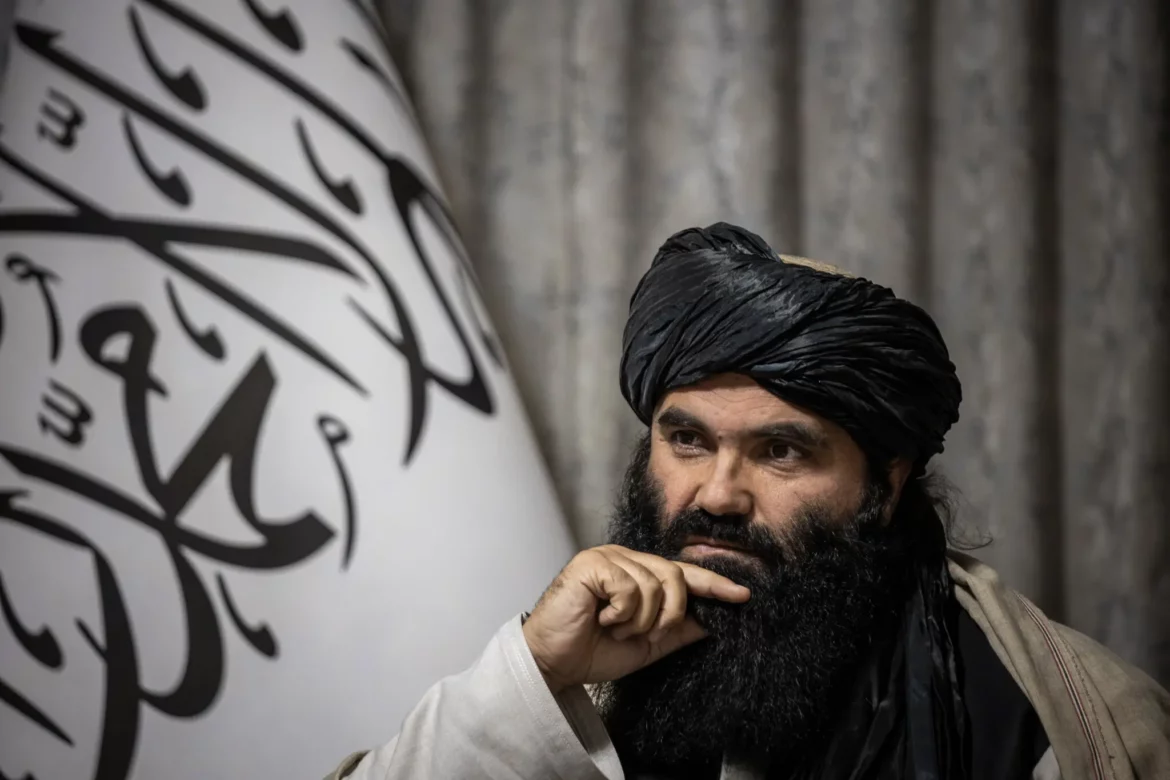
According to the Associated Press, the U.S. has lifted bounties on three senior Taliban leaders, including Interior Minister Sirajuddin Haqqani. Haqqani, who once claimed responsibility for a deadly 2008 hotel bombing in Kabul, is no longer listed on the State Department’s Rewards for Justice site, though his FBI wanted poster still appears online. Afghan officials said the U.S. also removed bounties on Abdul Aziz Haqqani and Yahya Haqqani, who are Haqqani’s brother and cousin (1).
Since regaining control of Afghanistan in 2021, the Taliban have sought to reshape their global image. They have promised moderation and stability, but the reality has been starkly different. Their regime remains deeply repressive, particularly toward women, and continues to harbor extremist elements, including members of al-Qaeda and ISIS-K. Intelligence reports consistently suggest that Afghanistan under Taliban rule remains a favorable environment for terrorist groups with ambitions far beyond its borders (2).
Despite these concerns, the Trump administration’s decision signals a shift toward normalization of relations, a move that critics warn could legitimize a regime that poses an ongoing threat to U.S. interests. According to recent United Nations intelligence, Taliban leadership has failed to sever ties with al-Qaeda. Meanwhile, ISIS-K remains one of the most dangerous extra-regional threats, responsible for attacks in both South Asia and Europe. These realities directly contradict the idea that the Taliban can be trusted to uphold international security norms (3).
Diplomatic engagement, such as Boehler’s visit to Kabul, may be intended to stabilize the region and open up humanitarian or economic channels. But removing bounties, historically used to target Taliban leaders responsible for insurgency and terrorism, sends a different message. One that suggests the U.S. may be willing to overlook past crimes in favor of strategic priorities.
This decision is particularly troubling given that the Taliban has acquired billions in U.S. military equipment following the 2021 withdrawal, and continues to benefit from strategic partnerships with countries like China, Russia, and Iran. These alliances provide both financial support and diplomatic cover, enabling the Taliban to maintain power while defying Western pressure. A policy that rewards this regime with leniency, instead of accountability, risks encouraging further defiance and extremism.
Supporters of Trump’s move argue that diplomacy requires difficult compromises and that integrating the Taliban into the international system could moderate their behavior. But history suggests otherwise. The Taliban have repeatedly broken previous promises of reform, particularly around women’s rights and counterterrorism.. The group continues to enforce strict Sharia law, silence dissent, and suppress education for girls. There is little evidence to suggest they are sincere in their attempts to reform.
Rather than lifting bounties, the United States should be increasing intelligence efforts and applying economic pressure through targeted sanctions. At the very least, any diplomatic outreach must be paired with clear expectations, enforceable commitments, and international oversight. Otherwise, the U.S. risks giving legitimacy to a regime that has shown little interest in living up to international norms.
Ultimately, dropping the bounties may be framed as a diplomatic attempt. But in reality, it undermines decades of counterterrorism policy and signals a dangerous willingness to overlook the Taliban’s past and ongoing actions. While diplomacy is an essential tool in foreign policy, it must not come at the cost of security, justice, or a country’s morals.
Footnotes
(1) “The US Lifts Bounties on Senior Taliban Officials, Including Sirajuddin Haqqani, Says Kabul,” AP News, March 23, 2025,https://apnews.com/article/afghanistan-taliban-haqqani-us-bounty-a9f5434850d78f15f81f72222c14b894.
Bibliography
“Afghanistan Implications of Taliban Rule.” National Intelligence Council, June 2022. https://www.dni.gov/files/ODNI/documents/assessments/NICM_Declassified__Afghanistan_Implications_of_Taliban_Rule_2022.pdf.
AP News. “The US Lifts Bounties on Senior Taliban Officials, Including Sirajuddin Haqqani, Says Kabul,” March 23, 2025. https://apnews.com/article/afghanistan-taliban-haqqani-us-bounty-a9f5434850d78f15f81f72222c14b894.
Goldbaum, Christina, and Adam Goldman. “U.S. Lifts Millions in Bounties on Senior Taliban Officials.” The New York Times, March 24, 2025, sec. World. https://www.nytimes.com/2025/03/24/world/asia/taliban-haqqani-bounties.html.
Security Council Report. “Afghanistan.” Accessed March 20, 2025. https://www.securitycouncilreport.org/monthly-forecast/2025-03/afghanistan-28.php.