By: Caitlin Chatterton, Haverford College ’27; Image by GAAA
In just a matter of days last month, several acts of violence occurred in Nigeria. The first target was a Catholic school, and the second was Muslim students. Responses to these devastating attacks varied: Whereas Pope Leo called for “the immediate release of the hostages” and is one who has previously acknowledged that both Christians and Muslims have been targeted in Nigeria, President Donald Trump called the widespread violence in Nigeria a “genocide” against Christians, and has even put military intervention on the table. Though Trump is not the first prominent public figure to view the violence as disproportionately and purposely targeting Christians, experts dispute this frame and dismiss it as lacking in nuance.
Widespread violence in Nigeria is not a new phenomenon. Maclean and Kanno-Youngs write that “more than 8,000 people [have been] killed this year alone.” For decades, the country has been a hotspot of violence which occurs throughout the country and manifests itself in a variety of forms. These include terrorism, kidnapping, land conflicts, and secessionist-based violence. Oftentimes, location is an indication of the type of violence given the actors present in the region. However, these forms of violence can often merge and intersect, which lead them to become more dangerous and even harder to pinpoint their causation. Additionally, there are several non-state actors present in the country who orchestrate these attacks. This includes several extremist groups such as, but not limited to, Boko Haram, al-Shabaab, and the Islamic State West Africa Province. There are also many attacks led by Fulani herders, who are “a mainly Muslim ethnic group who live across West Africa and have traditionally earned their living by raising cattle and sheep.” These disputes are mainly the result of economic conflicts, such as resource access and land grazing, and occur “with both Muslim and Christian communities across Nigeria.” Given the abundance of actors, drivers, and forms of violence, conflict and unrest is widespread in Nigeria. However, the question of whether it is specifically targeted and enacted against Christians is the question many have been asking due to the recent media attention and statements by world leaders, as well as the intersectionality of many actors in the region.
The consensus by many experts and both government and opposition leaders in Nigeria is that Christians are not facing a genocide in Nigeria right now. Under the UN definition, genocide occurs when there is “a proven intent on the part of perpetrators to physically destroy a national, ethnical, racial or religious group.” In addition, there is a physical aspect of conducting this intent in a systemized matter where it is necessary that “the victims of genocide are deliberately targeted.” As a result, mass violence and large attacks must be accompanied with proven intent of social group destruction in order to be categorized as genocide, which significantly limits the usage of the word despite its popular understanding of it. For the case of Nigeria, although there have been several attacks against Christian communities and churches, there have also been many Muslim and non-religiously affiliated communities attacked as well. Experts state that “there is no clear evidence to show that Christians are attacked more frequently than any other religious group in Nigeria.” There is significant economic, land-based conflict in the country, as well as the reality that many jihadi extremist groups attack those who do not agree and support their goals, which include Christians and Muslims alike.
However, that is not to say that there are no religiously motivated violence or attacks against specific religious groups in the region. ACLED has reported that there has been a 21% increase in attacks targeted against Christians from 2020 to 2021. Yet, alongside this increase in attacks against Christians, there was also a 28% overall increase in violence against civilians during the same time period. Additionally, the ACLED notes that violence was not predominately driven by religion as attacks against Christians compose only “around 3% of average monthly organized political violence events in the northwest and north-central regions since 2020.” With most violence occurring in the north of the country where there is a Muslim majority, as well as there being “a higher rate of attacks targeting groups based on gender and ethnicity as well as profession and government affiliation,” Christian religious identity is not the main target of violence in the region.
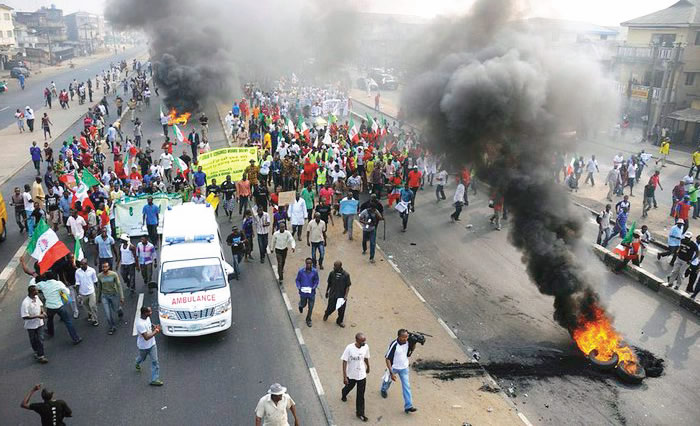
As a result, the violence in Nigeria is very complex and lacks a simple solution. With the variety of actors and reasons for violence, one solution will not be sufficient, however action is a necessity. To begin, the current environment in Nigeria is one of impunity. There has been massive state corruption and a lack of a state response, thus leading to little law enforcement and perpetual violence. Therefore, there must be action taken by the Nigerian government to hold perpetrators accountable for their actions. If there is to be a reduction in violence, the rule of law needs to be re-established and consequences for when it is broken. The U.S. can contribute to pressuring Nigeria to do so, however continuing to use the narrow lens of only Christians being targeted fails to recognize the larger problems at play in the country. The Nigerian government has not only failed to protect Christians from violence, it has failed to protect all of its citizens and should be held accountable in order to change. Not only that, but given the many victims of violence in Nigeria, it is problematic that the U.S. has taken this narrow focus on primarily only defending Christians. This is not an approach which the U.S. is alone in doing, as attacks against Muslims in Nigeria have predominantly garnered limited domestic and international outrage unlike attacks against Christians. However, it is an approach that needs to change as the U.S. should defend all human beings, regardless of their religious affiliation. Religious identity should not be the prerequisite of concern for other human beings’ lives, yet it is right now. Additionally, direct U.S. military intervention would not likely improve the situation significantly because it would not address the root causes of the violence. Thus, there is little doubt that action is needed to pressure the Nigerian government to act. As shown in the 2024 #EndBadGovernance protests, many Nigerians want their government to step up, not only to combat the economic difficulties faced by many, but to end the impunity which has run rampant in the country for years. Thus, the U.S. and President Trump should focus their efforts on pressuring the state to end impunity for all violence, regardless of religion.