By: Natasha Kwiatkowski BMC ’26
It should come as no surprise that the Trump administration is yet again embroiled in another controversy. This is not the first time Trump-affiliated officials have mishandled sensitive material. From the classified documents found in Mar-a-Lago to the disclosure of Israeli intelligence in 2017, the administration has a pattern of poor security norms.
The latest crisis concerns the handling of sensitive national security information and its sharing in relations to discussions about U.S. strikes in Yemen. On Monday, March 24th, the Atlantic’s Jefferey Goldberg published an article disclosing that he was inadvertently added to a group chat by former national security advisor Mike Waltz that included texts about upcoming military strikes in Yemen against the Houthis on a commercial messaging app, Signal. Signal, while encrypted is not authorized for classified communications, and Secretary of Defense Hegseth’s use of a personal phone instead of a government issued one dramatically increased the risk of unauthorized access or interception.
In a second leak, the New York Times reported in April, that Hegseth shared on March 15th, mostly the same information regarding the strikes in Yemen as in the first chat. However, unlike the first chat that included the Atlantic, Hegseth included his wife, brother, and personal lawyer. Both his brother and personal lawyer work for the Pentagon and neither had proper clearance or justification to access such high-level national security information.
Overall, the chats revealed discussions among the highest national security officials in the country: cabinet officials and senior White House staff members including Vice President J.D. Vance, the Secretary of Defense, and C.I.A director John Ratcliffe. Furthermore, Pete Hegseth disclosed to members in this chat the specific operational details only two hours before U.S. forces launched strikes against the Houthi militia. It is important to note however, the information was leaked to the public only after the attacks had taken place.
As the title of the blog suggests, I believe that the Signal chat leaks will jeopardize future U.S. counterterrorism operations. The real danger lies not just in the leaks themselves but in the broader breakdown of operational security protocols at the highest levels of government. In the first instance, by sharing the information in a haphazard way, Hegseth seriously undermines public confidence in his ability to wage the current campaign in Yemen. Secondly, effective counterterrorism efforts rests on having the support of allies that see the United States as serious partner in counterterrorism efforts. To our allies, they need to be assured that the sensitive information they share is handled appropriately and seriously.
The Signal scandal raises a pressing question: how can we be sure sensitive national security information remains protected? With the existence of a haphazard information sharing policy that resulted in massive leaks, how can members of both the public, national security apparatus and counterterrorism sector be sure that Hegseth and the Trump administration are effectively safeguarding our national security.
Additionally, as I touched on in my last paragraph, mishandling of intelligence impacts our relationship with strategic partners in Europe and the Middle East and affects their willingness to share sensitive information with the U.S. Perceptions on the U.S.’s reliability have already been degraded from incidents such as the Mar-a-Lago documents case, disclosure of Israeli intelligence and Director of National Intelligence Tulsi Gabbard’s coziness with Russia. If not already, the Singal controversy will only solidify the notion that U.S. is untrustworthy.
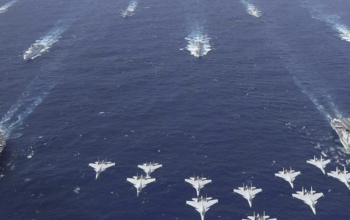
What is particularly problematic in the case of Signal is that the information that Hegseth had shared included flight schedules targeting the Houthis. Outlined in the chat were the exact times Navy F/A-18F Super Hornets as well as MQ-9 Reaper drones would execute strikes against the “Target Terrorist,” Hegseth described as an unidentified Houthi commander. This blatant disregard for national security protocol or care in sharing sensitive information like this, not only risks the United States’ national security but also the lives of the pilots who are executing these missions.
These strikes against the Houthis marks the first major engagement in the Middle East by the Trump administration and of Hegseth’s tenure, even though the Biden administration initiated airstrikes in early 2024. On March 15th, the same dates as the chats, the U.S. began airstrikes known as “Operation Rough Rider” against the Iran-backed militant group. Strategically, these strikes were designed to punish the Houthis for attacking international cargo ships in the red sea. Despite the multiple Signal leaks, the actual campaign in Yemen has surprisingly gained little attention. It is also notable that the standoff between the U.S. and the Houthi rebels had the potential of plunging the U.S. into another “endless” war, which Trump has promised to stay away from. A few days ago, the Trump administration ceased its campaign against the Houthis.
This brings us back to Hegseth and the Signal chat leaks. Although the Signal chats were leaked after the attacks had already occurred, they nonetheless revealed key operational details. These disclosures might not have altered the outcome of this specific mission, but they indicate a breakdown in secure communications. If adversaries learn how and when sensitive information is shared among U.S. officials, future strikes may no longer benefit from the element of surprise. Furthermore, if allied confidence in the United States is fully eroded, counterterrorism efforts will largely become ineffective due to a decrease in credible intelligence only allies in the region can provide.
It is beyond the scope of this blog to comment on whether Hegseth should remain as Secretary of Defense, but it is appropriate to question whether the current “texting” of major operational plans serves U.S. national security interests, especially when those texts become public knowledge.
Sources:
https://www.nytimes.com/interactive/2025/03/25/us/signal-group-chat-text-annotations.html
https://www.nytimes.com/2025/04/20/us/politics/hegseth-yemen-attack-second-signal-chat.html
https://www.nytimes.com/article/war-plans-signal-chat-what-to-know.html
https://www.vox.com/world-politics/410186/trump-yemen-houthis-rough-rider
https://thehill.com/policy/national-security/5258107-pete-hegseth-attack-plans-signal
https://thehill.com/policy/defense/5260341-pete-hegseth-second-signal-chat-unclassified-info
https://www.nytimes.com/2011/05/02/world/asia/osama-bin-laden-is-killed.html https://www.politico.com/news/2025/05/06/trump-us-stop-bombing-houthis-00330884