By Barak Bacharach (HC ’15)
I treasure my experiences in the Bi-Co and still feel a part of it, even after a decade. Nevertheless, I am troubled by an orientalist, Western-centric attitude that has permeated debates and activism regarding events around the world that have become de rigueur in the Bi-Co as of late. I do not believe that a single person in the Bi-Co intends to be antisemitic. However, it is well-accepted that prejudice and racism need not be intentional to be actionable. It is clear, at this point, that many people at the Bi-Co have adopted an ideology, antizionism, which is predicated on an orientalist, Arab supremacist point of view which deliberately erases the lived Jewish experience (and the lived experiences of other minorities in the Middle East and North Africa). Israel and Palestine are places in the Middle East, and Jews are not foreigners to the Middle East. Approaching the longstanding conflict between Arabs and Jews solely through an American or Western point of view is orientalist. Subsuming the experience of Jews in the Middle East (especially Mizrahi Jews) into one’s preconceived notions about Jews in the United States is both orientalist and antisemitic. Subsuming the experience of Arabs in the Middle East into one’s preconceived notions about Arabs in the United States is both orientalist and anti-Arab.
Let me be clear: it is intellectually and morally bankrupt to divorce the Israeli-Palestinian conflict from the larger conflict between an Arab majority and the Middle Eastern minorities they dominate and doing so is upholding Arab supremacy (1). Acknowledging the reality of Arab supremacy in the Middle East in no way contradicts or denigrates the reality of White supremacy. Rather, refusing to acknowledge Arab supremacy is in itself white supremacist, as again, it orientalizes the people of the Middle East by viewing them solely through a Western lens. It further emboldens the Israeli right wing, which is overwhelmingly supported by Mizrahi Jews (2) who trade on the very legitimate fears of Arab domination borne out by 1400 years of oppression.
The foregoing and following words may ring harsh and should be difficult and uncomfortable to read – unlearning implicit biases is a painful process requiring soul searching. Just as White people who unlearn White supremacy must go through this painful process, it appears now that antizionists in the Bico (and arguably in academia at large) must grapple, as well, with Arab supremacy. Preserving power structures that exclude Jews as a people is not only morally reprehensible but practically self-defeating as well because it only further convinces Jews about the need to exist in a place where we are not subject to White supremacy and Arab supremacy – the only such place being Israel. Indeed, the climate at Haverford has already convinced at least one Jewish incoming freshman to publicly move to Israel, and there are no doubt more who will follow. If you care about stopping Zionist colonization, this essay is for you.
The fact that antizionism inevitably results in the opposite of its desired outcome exposes its greatest practical problem. Not only is the antizionist movement misguided, but it is also a fundamentally destructive, harmful ideology that can only bring us further away from a just and lasting solution in Palestine and Israel. Zionism is somewhat of a meaningless term after 1948 as the Zionist goal was achieved; Israel is established and it is here. An ideology predicated on undoing Israel is by definition destructive and of course, impalpable to people who have lived in Israel now for generations.
Perhaps the most perverse part of antizionism’s inherent Arab supremacy is that its greatest victims are Palestinians. For instance, Palestinians in Lebanon cannot own property, cannot work white-collar professions, and are excluded from obtaining social security benefits even though they must pay a social security fee for a work permit (3). Jordan has been quietly stripping Palestinians of citizenship for the last 20 years (4). As is well known, Palestinians have the only UN refugee agency devoted solely to displaced people from one conflict, UNRWA. All other refugees are under the ambit of the UNHCR. The largest difference between the UNHCR and UNRWA is that the former has an explicit mandate to resettle refugees because refugee status is not passed down in perpetuity while the latter has a mandate to continue refugee status in perpetuity. This has the effect of ensuring that generations of Palestinian refugees outside of Israel and Palestine will be stateless forever so that they may effectuate a forever war against Israel in the name of antizionism. It is quite simply dehumanizing.
The foregoing essay will expand on the previous points while identifying how Arab supremacy became established in postcolonial studies. It presupposes the reader is familiar with the basic precepts of postcolonial studies as well as antizionism, although a definitions section follows for clarity.
DEFINITIONS
First, I will define “Zionism” and “antizionism” in only their most essentialist terms. “Zionism” refers to the existence of a Jewish (5) majority state somewhere in the Levant. It does not mean that a future state of Palestine also cannot exist; indeed, the two-state solution is explicitly zionist. “Antizionist” refers to an ideology predicated on the erasure of said Jewish majority state, embracing the “one-state solution.” A fundamental precept of antizionism is that the State of Israel is illegitimate, that it is, at its core a “genocidal, settler-colonial project” to use the FJP’s preferred terminology, or that it is an “apartheid settler colonial state” which must be “completely dismantled” to quote the Haverford SFLP. It is the idea that the Israeli identity is illegitimate, that anyone who identifies as Israeli or a zionist is a colonizer and morally wrong, and therefore “all means necessary” to again use the SFLP’s preferred terminology (a clear callback to their militant namesake, the PFLP) against Israel or its people are legitimate.
Now let me address what is not inherently antizionism: being opposed to Israel’s actions, any of them. Being opposed to Israel’s actions in the war in Gaza is not necessarily antizionism. Being opposed to settlements in the West Bank is not necessarily antizionism. Both zionists and anti-zionists can oppose Israel’s actions in the war with Gaza as well as settlement expansion, judiciary reform, or any one of the many Israeli policies. Indeed, over 150,000 people in Israel, most of whom presumably do not want to see it dismantled, protested against the war this past June (6). Another 400,000 protested for a ceasefire and a hostage deal recently. One can oppose any one of Israel’s actions without advocating for its replacement by Palestine – however, those who advocate the latter are inherently Arab supremacists.
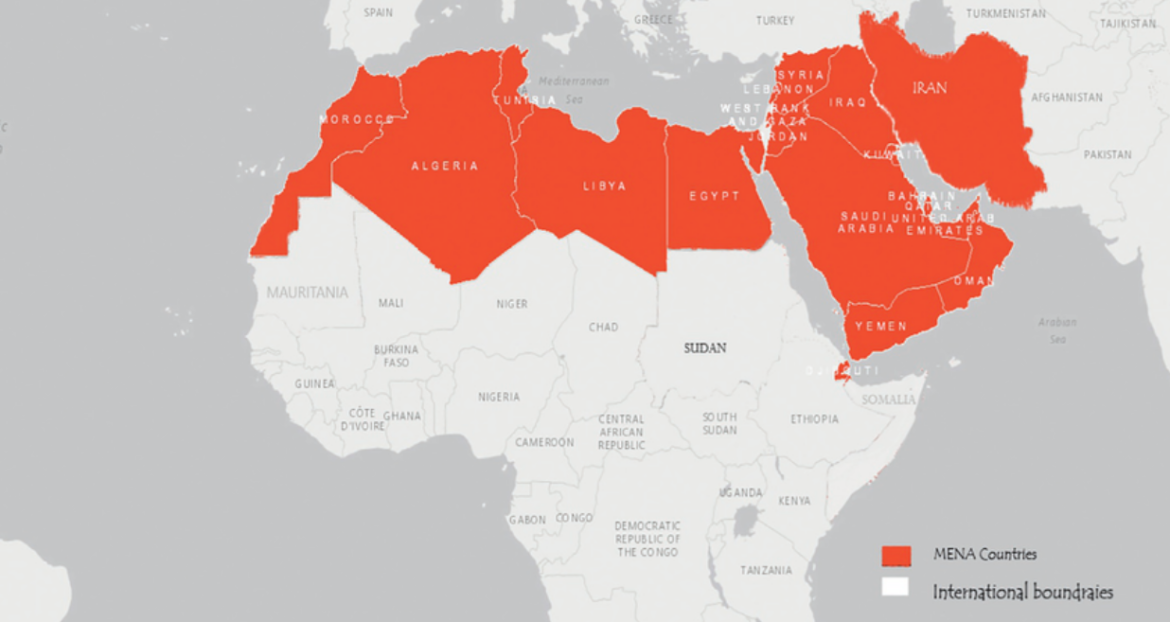
Secondly, orientalism. Orientalism can be broadly defined as understanding the MENA (Middle East and North Africa) solely through its relationship with the West. As Edward Said stated in the introduction of his seminal book, Orientalism:
“Orientalism is premised upon exteriority, that is, on the fact that the Orientalist, poet or scholar, makes the Orient speak, describes the Orient and renders its mysteries plain for and to the West. He is never concerned with the Orient except as the first cause of what he says. What he says and writes, by virtue of the fact that it is said or written, is meant to indicate that the Orientalist is outside the Orient, both as an existential and as a moral fact.”
Viewing the MENA solely through a Western lens is a form of orientalism. Specifically, assuming everyone in the MENA is and always was Arab is a form of Orientalism. Assuming that Western colonialism is the only form of colonialism that affected the MENA is orientalism. Viewing the relationship between Arabs and other ethnic groups in the MENA solely through the lens of those groups’ interactions with the West and not with each other is Orientalism. Indeed, it is clear from the casual way interested parties refer to all Middle Easterners as “Arab” or “Muslim,” that the orientalist framework of flattening the entire MENA into “Arabs” and “foreigners” has taken root at the Bi-Co. All of these are also (obviously) Eurocentric. Indeed, eurocentricity and orientalism go hand in hand and cannot be disentangled from each other.
Third, Arabs. This may well be the hardest definition of them all, and I am not equipped or entitled to define it. Therefore, I will use Professor Steve Tamari’s, a Syrian-American scholar of the Middle East, succinct definition: “Arabs are those who speak Arabic as their native tongue and who identify themselves as Arabs,” (7). The second part of this definition is important – as many minority groups, such as Copts, Kurds, Jews, Yazidis, Assyrians, and others had Arabic forced upon them by the spread of Arab colonialism. Although they speak (or spoke) Arabic as the lingua franca, they do not self-identify as Arabs (8). Forcing Jews or others into the Arab identity is an erasure of their identities.
Fourth Arab supremacy. Francis Lee Ansley describes White supremacy in the following way:
“By ‘White supremacy’ I do not mean to allude only to the self-conscious racism of White supremacist hate groups. I refer instead to a political, economic and cultural system in which Whites overwhelmingly control power and material resources, conscious and unconscious ideas of White superiority and entitlement are widespread, and relations of White dominance and non-White subordination are daily re-enacted across a broad array of institutions and social settings” (Ansley as cited in Gillborn, 2006, p. 320).
In the context of the (MENA), the most clear corollary to white supremacy is Arab supremacy, indeed:
“A political, economic and cultural system in which Arabs overwhelmingly control power and material resources, conscious and unconscious ideas of Arabs superiority and entitlement are widespread, and relations of Arab dominance and non-Arab subordination are daily re-enacted across a broad array of institutions and social settings” describes the MENA to a tee.
Arabs overwhelmingly hold political power in no less than 19 states in the Middle East and North Africa (out of approximately 22), the self-described “Arab world,” and the “Arab League,” comprising over 5 million square miles and over 350 million people. Arabic is spoken from Iraq to Morocco as part of a calculated effort to replace indigenous languages with Arabic (9). In the Gulf states, slavery is widespread, and the most common slaves are non-Arab Muslims (usually South Asians) (10). Further, slavery by White Arab overlords (known as the Bidan) over the Black underclass (known as Haratin or Abid, slave in Arabic), is a well-documented phenomenon in North Africa as well; indeed, the BBC estimated that Mauritania alone had 600,000 slaves in 2018 (11).
Arabs conquered and colonized the MENA beginning in the 7th century, gradually replacing its indigenous cultures with Arabic culture in a process usually called Arabization, which is a deliberately innocuous term for what might be better called ethnic cleansing and Arab colonialism (12). This process eventually even expanded to the European continent (13). It is undisputed that Arab Muslim conquerors were generally far more tolerant towards minorities than Europeans, and generally treated Jews better than the European Christians did, until roughly the 17th through 19th centuries. This does not mean that Jews were “free” or that Jews and Muslims “coexisted” – Muslims were superior in every way. Compared to the horrendous treatment of Jews in Europe, however, it was an improvement.
Indigenous non-Arab people were forced to adopt the Arabic language and customs. Arab colonialism resulted in the wiping out of innumerable indigenous cultures forever lost to time, similar to European colonialism in the Americas. However, a few indigenous peoples remained, such as Kurds, Assyrians, Berbers (Tuaregs), Yazidis, Copts, and Jews. Every single one of these remains subject to ethnically based violence by Arab supremacists in the 21st century.
Arab domination of indigenous peoples of the MENA is a phenomenon that continues to this very day. For instance, in the name of Arab nationalism, (merely the most modern manifestation of Arab supremacy) Baathist Iraq genocided, ethnically cleansed, and deliberately Arabized the Iraqi parts of Kurdistan in a genocide known as the Anfal campaign beginning in the 1980s (14). ISIS deliberately genocided non-Arab (but Muslim) Yazidis solely on ethnic grounds in the 2010s (15). Arab Sudanese militias are genociding the indigenous non-Arab (but Muslim) Masalits at this very minute (16). Indeed, Sudan has been subject to forced Arabization in the name of Arab nationalism since the 1950s (17).
In modern times, the Arab hegemony of the Middle East was enshrined after the dissolution of the Ottoman Empire in the wake of WWI when the British installed their Hashemite (Sunni) Arab allies as kings in the newly formed kingdoms of Iraq, Syria, Jordan, and Saudi Arabia, even though there were millions of Kurds and other minorities in the former two territories (as well as scattered minorities throughout the middle east).
Palestine is a Self-Defined Arab Cause
The Palestinian national cause, and the antizionist movement more broadly, are inexorably linked to Arab nationalism and pan-Arabism. Indeed, the flag of Palestine is identical (https://images.app.goo.gl/g8kw8Usbcj26tLJo7) to the Pan-Arab Baath party flag under which Saddam Hussein enacted his brutal Anfal campaign on the Kurds. According to a recent survey undertaken by the Doha Institute, the preeminent polling organization of the Arab world, “Arab public opinion sees the Palestinian Cause as an Arab issue, and not exclusively a Palestinian issue. A consensus of 92% believes that the Palestinian question concerns all Arabs and not just the Palestinians,” (18). The chant “from the river to the sea” in Arabic was original “min nahr al bahr falasteen arabiyye” which Arabic and Hebrew speakers will immediately recognize as “from the river to the sea, Palestine will be Arab.” The opening paragraph of the Constitution of Palestine, adopted in 2005, reads:
The continuous attachment of the Arab Palestinian people to the land of their fathers and forefathers, on which this people has historically lived, is a fact that has been expressed in the Declaration of Independence, issued by the Palestine National Council. The strength of this attachment is confirmed by its consistency over time and place, by keeping faith with and holding onto national identity, and in the realization of wondrous accomplishments of struggle. The organic relationship between the Palestinian people, their history and their land has confirmed itself in their unceasing effort to prompt the world to recognize the rights of the Arab Palestinian people and their national entity, on equal footing with other nations (19).
Pretending that antizionism at its most basic manifestation, Palestinian nationalism, is not self-identified as Arab Nationalism, pan Arabism, and Arab supremacy more broadly, is both intellectually and morally bankrupt, and collective gaslighting of Arab supremacy’s many victims – amongst whom some of the most long-standing are Mizrahi Jews.
Jews Have Been Victims of the Same Forces Animating the Antizionist Movement For Millennia
The restrictions on Jews under Arab rule were manifold, and pervasive and go back to the beginning of the early Islamic conquests. Again, the fact that these were less brutal than what Christians forced on Jews before the 19th century does not mean Jews did not suffer in the Middle East. One can acknowledge that Muslims did treat Jews better than Christians without romanticizing the institutionalized apartheid Jews suffered under Muslim dominion for millennia.
Jews were subject to a system akin to apartheid, where they were known as dhimmis, and forced to pay a tax, Jizya, which was not applied to Muslims. The word Jizya appears only once in the Quran, in Surah 9:29, which states:
Fight those who do not believe in Allah and the Last Day, nor comply with what Allah and His Messenger have forbidden, nor embrace the religion of truth from among those who were given the Scripture, until they pay the tax (jizya), willingly submitting, fully humbled (20).
The concept that taxation should result in the “humbling” (or humiliation, depending on the translation) of non-believers manifested itself not only in monetary form but in pervasive restrictions. For instance, at various times, Jews were forbidden from riding horses, renovating or building synagogues, learning Arabic, praying publicly, had to give up their seat for Muslims, and could not carry weapons in self-defense (21). The latter was particularly threatening as it permitted wanton massacres of Jews, of which several occurred in Palestine/Israel prior to the 20th century (22). Further examples include the Granada massacre in 1066, the Mawza exile, and the Farhud in Baghdad in 1941. Indeed, Jewish self-defense being against Islamic law is still the rule of law in Iran to this day, as a young Jewish man, Arvin Gharemani, was recently executed for what all sides agree was self-defense against a Muslim aggressor (23). Yet another example of how the traditional Islamic court system was stacked against dhimmis was that their testimony was inadmissible against the word of a Muslim (24). This meant that in order to seek legal recourse, the dhimmi had to hire a Muslim witness – or be left with no protection from the court system when faced with threats from Muslims.
The seminal Tunisian Jewish post-colonial scholar, Albert Memmi, illustrated how “relations of Arab dominance and non-Arab subordination are daily re-enacted across a broad array of institutions and social settings” described daily life for Mizrahi Jews in Arab countries to a tee:
“We would have liked to be Arab Jews. If we abandoned the idea, it is because over the centuries the Moslem Arabs systematically prevented its realization by their contempt and cruelty. It is now too late for us to become Arab Jews. Not only were the homes of Jews in Germany and Poland torn down, scattered to the four winds, and demolished, but our homes as well.
Objectively speaking, there are no longer any Jewish communities in any Arab country, and you will not find a single Arab Jew who will agree to return to his native land.
I must be clearer: the much-vaunted idyllic life of the Jews in Arab lands is a myth! The truth, since I am obliged to return to it, is that from the outset we were a minority in a hostile environment; as such, we underwent all the fears, the agonies, and the constant sense of frailty of the underdog.
As far back as my childhood memories go – in the tales of my father, my grandparents, my aunts, and uncles – coexistence with the Arabs was not just uncomfortable, it was marked by threats periodically carried out.
We must, nonetheless, remember a most significant fact: the situation of the Jews during the colonial period was more secure because it was more legalized. This explains the prudence and the hesitation between political options of the majority of Jews in Arab lands. I have not always agreed with these choices, but one cannot reproach the responsible leaders of the communities for this ambivalence – they were only reflecting the inborn fear of their co-religionists.
As to the pre-colonial period, the collective memory of Tunisian Jewry leaves no doubt. It is enough to cite a few narratives and tales relating to that period: it was a gloomy one. The Jewish communities lived in the shadow of history, under arbitrary rule and the fear of all-powerful monarchs whose decisions could not be rescinded or even questioned.
It can be said that everybody was governed by these absolute rulers: the sultans, beys and deys. But the Jews were at the mercy not only of the monarch but also of the man in the street. My grandfather still wore the obligatory and discriminatory Jewish garb, and in his time every Jew might expect to be hit on the head by any Moslem whom he happened to pass.
This pleasant ritual even had a name – the chtaka; and with it went a sacramental formula that I have forgotten. A French orientalist once replied to me at a meeting: “In Islamic lands, the Christians were no better off!” This is true – so what? This is a double-edged argument: it signifies, in effect, that no member of a minority lived in peace and dignity in countries with an Arab majority!
Yet there was a marked difference all the same: the Christians were, as a rule, foreigners and as such protected by their mother countries. If a Barbary pirate or an emir wanted to enslave a missionary, he had to take into account the government of the missionary’s land of origin – perhaps even the Vatican or the Order of the Knights of Malta. But no one came to the rescue of the Jews, because the Jews were natives and therefore victims of the will of “their” rulers.
Never, I repeat, never – with the possible exception of two or three very specific intervals such as the Andalusian, and not even then – did the Jews in Arab lands live in other than a humiliated state, vulnerable and periodically mistreated and murdered, so that they should clearly remember their place (25).”
The Rambam, known in English as Maimonides, one of the greatest Torah scholars known to history, who lived in Cairo, also described in detail the experience of Jews under Arab rule: “God has entangled us with this people, the nation of Ishmael, who treat us so prejudicially and who legislate our harm and hatred… No nation has ever arisen more harmful than they, nor has anyone done more to humiliate us, degrade us, and consolidate hatred against us,” (26).
Mizrahi Jews lived as, at best, second-class citizens, and, at worst, victims of random massacres and pogroms because of their faith and ethnicity under Arab rule for over a thousand years. Between 1948 and 1970, over 800,000 Mizrahi Jews were ethnically cleansed from Arab lands in a nakedly Arab supremacist campaign (allegedly in support of the Palestinians), the majority of whom fled to Israel (27). Advocacy groups for Mizrahi Jews estimate that Mizrahi Jews were forced to abandon over 100,000 km of property they owned, totaling billions of dollars (28). A 2018 poll found that 44.7% of Israeli Jews identified as Mizrahi and a further 7.9% identified as mixed Ashkenazi and Mizrahi (29). It is undisputed that a slight majority of Israeli Jews have Mizrahi ancestry.
Postcolonial Studies Has Long Had Arab Supremacist Undertones
Edward Said was most likely the single most influential post-colonial scholar ever, with the possible exception of Franz Fanon, and certainly the most influential Palestinian scholar. A seminal figure in postcolonial studies, his attitudes towards Zionism are part and parcel of modern-day antizionist thought. Unfortunately, however, Said himself had his own biases, and either purposefully or unknowingly failed to realize or acknowledge the dominance that Arabs wielded over others, and the devastating effects it had on the minority populations of the Middle East. Said liberally used the term “Arab world” to refer to the Middle East and North Africa (30), either knowingly or unknowingly erasing the numerous non-Arab ethnicities who were resisting Arabization (31).
A more concrete example of Said’s Arab supremacy is his relationship with Saddam Hussein. Said claimed he was opposed to the Gulf War and also Saddam Hussein’s regime: “Days after Iraq’s invasion of Kuwait in August 1990, Said described the Iraqi action as a ‘military intervention.’ [14] He condemned Saddam as an appalling dictator ‘whose rule in Iraq has turned the place into a graveyard of democracy,’” (32). Further, on March 7, 1991, after the Gulf War, he published an article pondering the war in which he stated “‘I do not excuse and have not excused the aggression of Iraq against Kuwait. I have condemned the abuses of Saddam Hussein’s government, and those of the other governments of the region, whether Arab or Israeli,’” (33). However,
“Said wrote in the same article ‘the claim that Iraq gassed its own citizens has often been repeated. At best, this is uncertain.’ Said’s use of the word ‘uncertain’ is important because it connotes negative skepticism. The word ‘probable,’ on the other hand, connotes a positive skepticism implying that there is more evidence in favor of the claim that Saddam had gassed his own citizens than against it. Said’s negative skepticism ignores the considerable evidence widely available at the time to show that it was ‘probable,’ if not certain, that Saddam had gassed the Kurds. For instance, in 1988 the United Nations declared Iraqi use of chemical weapons in its war with Iran, and in August it was concluded that Iraqi use was far more frequent than Iranian use. In October 1988, both the United Press International and the U.S.-based NGO Physicians for Human Rights reported Iraqi use of chemical weapons against its own citizens.
This corroborated the utterances of Iraqi Kurdish leader Jalal Talabani who told Le Monde: ‘It is no exaggeration to say that using chemical weapons has become routine for the Iraqis…The army uses them routinely when it undertakes a major operation in Kurdistan and even resorts to it to cover its retreat.’ Despite this, Said’s use of the term ‘uncertain’ was an attempt to further the idea that Iraq was undeserving of the treatment it was getting by the American media and supporters of the Gulf War, and to undermine the perception of Iraq as the most brutal regime in the region. More than one year later, in September 1992, Said finally acknowledged that Saddam had indeed committed genocide when he wrote that the U.S. ‘actually supported [Saddam] during the Ba’ath genocide against the Kurds.’ In his belated acknowledgment of this Iraqi crime, Said expressed himself in such a way as to say something damning about American foreign policy. What Said leaves out in this statement is the central point that for such an act of barbarity, the party responsible was the Iraqi regime regardless of its relationship with other countries (34).”
What ultimately made Said opposed to Saddam Hussein was emphatically not his barbaric treatment of the Kurds of Iraq – rather, it was his territorial aggression towards a fellow Arab state. Indeed, Said excused and minimized Saddam’s usage of chemical weapons on his non-Arab citizens – and only condemned it when it fit his agenda of opposing Western imperialism and also Arab aggression towards fellow Arabs. Kurdish intellectuals have not forgotten, and some have and never will forgive Said (35). Indeed, one Kurdish intellectual has already made the point that:
“….writers and scholars like Edward Said, Tariq Ali, and Hamid Dabashi often and selectively have taken sides with Palestinians against the US and Israel, but rarely addressed the political grievances of the large Kurdish population in the Middle East; which has been subjected to ethnic discrimination, genocide, linguicide and cultural assimilation.
While a large part of leftist intellectuals and writers continue to enchant certain national movements like the Palestinian movement as an anti-imperialist/anti-racist/anti-colonial movement, some of them tend to marginalize and mute the Kurdish national movements in the Middle East as internal problems of certain states and fail to see the historically imposed fragmentation of the Kurdish identity…
Unlike Chomsky, Pinter, and Fo, Said not only marginalized the Kurdish national rights inhabiting two Arab-dominated states Iraq and Syria, but also took an apologist approach when Saddam’s regime gassed the Kurds in Iraq during the 1980s. The only time Said relied on a report written by the CIA, was when it cast suspicions on the accuracy of news about Saddam’s usage of chemical weapons against the Kurds and blamed the Iranian army for that atrocity…
Since postcolonial scholarship has been heavily influenced by Said, it has in turn influenced many postcolonial thinkers to follow Said’s footsteps to take sides against Zionism and write about the Palestinian movement as the symbol of leftist agenda and anti-imperialism…
This heinous double standard becomes visible when the nationalisms of the subaltern groups are thoroughly problematized and deconstructed when they flag their nations and aspire to achieve what the dominant nations have achieved and monopolized.
The nationalism of the subaltern groups is assumed to create separatism, while the nationalisms of dominant groups are championed for creating social cohesion, brotherhood, and unity across differences, while in reality creating large political distances in terms of political, cultural, and economic inequalities,” (36).
Indeed, the double standard between the nationalism of the “dominant group” and the “subaltern group” has only intensified and expanded in recent times. Palestinian (explicitly Arab) nationalism is championed as the singular cause because of its alleged universalism and centrality in the anti-imperialist struggle, while at the same time, Pan-Arab identity is used to obviate Jewish identity by the most prominent pro-Palestinian voices in the Bi-Co (37). The claim that the chant “‘Palestine is Arab’ invokes an era before the arrival of colonial Zionism when ‘Arab Jew’ was not an Oxymoron and peaceful coexistence was the norm among the multi-faith population,” as stated by the Bryn Mawr SJP, is pure Arab supremacist erasure of the Mizrahi Jewish experience and identity in a naked attempt to champion Arab nationalism. “Arab Jew” is an oxymoron both because the higher status of Arabs was deliberately withheld from Mizrahi Jews in order to oppress them, as detailed by Memmi, and Mizrahi Jews did not wish to abandon their own language, traditions, and culture in order to become “Arab.”
At the same time that Arab nationalism and supremacy are championed as a unifying force, Jewish nationalism, Zionism, is utterly derided, Jewish identity absent Arab colonialism is denied, and Palestinian solidarity groups champion the belief that Mizrahi Jews should merely accept being part of a larger Arab identity (38). Ashkenazi Jews appear to not have a distinct identity at all and are merely “Europeans.” Id. It is a clear case of championing the dominance of the foremost group in the Middle East over a “subaltern group.”
The Practical Dangers of Arab Supremacy
The most practical danger of Arab Supremacy, and its corollary antizionism, is that it fundamentally frames the Israeli-Palestinian conflict as a zero-sum game. Either the Palestinians must conquer all of Israel from the river to the sea or they will continue fighting. Note that one could say the same about Jewish supremacy, which I will address as well within this section.
- The practical danger of Arab Supremacy Amongst the Palestinians and the Arab World.
The effect of this is to dehumanize Palestinians into being, for lack of a better term, human weaponry. The raison d’etre of Palestinians is to fight Israel – and not merely for a two-state solution, but until Israel no longer exists. This manifests itself in horrific ways, both for Palestinians inside Palestine and outside.
Palestinians inside Palestine are encouraged by societal forces both internally and externally to quite literally kill themselves in the name of struggling against Israel. The most clear example of this is suicide bombers. More recently, because suicide bombings have become impractical, there have been a series of random knife attacks by Palestinians on armed individuals where the attacker knows that they will be killed, as they are literally bringing a knife to a gunfight, but attack regardless.
Even though these attacks serve no practical purpose (and indeed, are very destructive to any peace process) these individuals are feted in the antizionist movement as “martyrs” who lost their lives in a greater struggle. I will be clear – glorifying “martyrdom” is encouraging naive young men and women to commit suicide for no practical reason. It is fundamentally antithetical to any culture that places value on human life.
Palestinians outside Palestine may have it even worse. As I mentioned earlier, Palestinians in Lebanon are subject to onerous restrictions, such as:
“Although Palestinians have been in Lebanon for 75 years, they do not have the right to own property. They can only buy a house in the name of a Lebanese citizen and, if they have a dispute with this person, they lose their home. Palestinians do not have access to education and health institutions, and these services are provided minimally through UNRWA. UNRWA’s 64 schools educate 40,000 students and its 27 primary health care facilities provide more than 524,000 health services annually. Approximately 90 percent of UNRWA’s workforce is comprised of Palestinians.
The Lebanese State prohibits Palestinians from working in many qualified professions, such as medicine, engineering, and law. Palestinians working in permitted fields of work cannot benefit from fundamental social rights and services, such as salary payment in case of illness and maternity leave, even if they work with insurance. Thus, Palestinians are excluded from the labor market, and those who can find a job are forced to work for low wages without employment and insurance security,” (39).
Jordan has been quietly stripping Palestinians of citizenship for the last 20 years (40). Palestinian refugees in Syria, where most other Palestinian refugees live, have no citizenship, are frequently subject to violence and displacement, have essentially no legal protection at all, and were therefore some of the worst victims of the Syrian civil war (41). As I previously mentioned, Palestinians are the only refugees in the world whose agency dedicated to helping them (UNRWA) does not have a mandate to resettle them. The practical effect of this is to keep Palestinians outside of Palestine stateless with no legal protection forever, to incentivize them to wage a forever war against Israel in the hope they or their descendants can return.
This again essentially turns Palestinian refugees and their descendants into human weapons – rather than give them rights right now where they are and have been for 75 years, their fundamental rights are withheld in perpetuity until Israel is conquered. There is no ethical code that values individual human rights which can justify the continued lack of rights and statelessness for generations or perhaps in perpetuity. Indeed, one can even demand the right of return while also acknowledging that until it is granted, Palestinian refugees as individuals should not be made to suffer outside of Palestine and Israel.
- The Practical Dangers of Arab Supremacy Amongst Jews
Arab supremacy feeds Jewish supremacy. Indeed, the rise of the Israeli right and its Jewish supremacist agenda can be directly linked with the failure of the peace process and the resulting intifada. The settlement movement was marginalized for decades in Israeli politics; indeed a right-wing Israeli prime minister uprooted Israeli settlements and returned Gaza to the Palestinians in 2005. At the same time, three settlements were removed from the Northern West Bank. Because, however, that did not result in any movement towards peace and rather, the opposite, as clashes between Hamas and the IDF began almost immediately after Israel’s withdrawal, the Israeli public began to view the withdrawal as a mistake that only resulted in further attacks. Suicide bombings began again just a few months after Israel withdrew from Gaza (42), and ten years later, both Israelis and Palestinians overwhelmingly viewed the withdrawal as a catastrophic mistake (43). This attitude was solidified on October 7, 2023, and, any hope of winning public support for further withdrawal from territories occupied by Israel has been indefinitely ruined. Indeed, after October 7, 2023, the Israeli parliament reversed the ban on Israeli settlement in the three settlements evacuated in the Northern West Bank in 2005 (44).
The settler right has been emboldened in the years since 2005 because their uprooting from Gaza and Israeli withdrawal was a failure, that did not lead to any tangible benefits for either Israelis or Palestinians. The reason that the withdrawal, and ultimately the peace process failed, was, in short, a self-perpetuating cycle of hardline Arab and Jewish supremacy. Not content to stop at Gaza or the West Bank, Hamas insisted on conquering the whole of Israel and immediately began rocket attacks following the withdrawal. This in turn strengthened the Israeli settler right’s “all or nothing” position regarding Palestine/Israel. President Trump’s recent ludicrous claim that the US should take over Gaza and resettle its people is a perfect encapsulation of how both sides’ extremists approach the conflict as fundamentally us vs them, which cannot lead to an equitable peace. Indeed, The direct link between the failure of the 2005 withdrawal to lead to peace, ultimately leading to October 7, to the settler right reoccupying settlements they withdrew from in 2005 and convincing a US president to float ethnically cleansing Gaza is a concrete and clear example of how taking a hardline, all-or-nothing approach only emboldens extremists in Israel and Palestine (45).
Lastly, trauma is not a zero-sum game, nor is it a contest. It is entirely appropriate and necessary even to recognize both Israeli and Palestinian trauma and respond to each in kind. However, casting Jews, especially Mizrahi Jews, as foreign interlopers in the only place they have ever been free from Arab and White supremacy only sends the message that one desires Jews to be under the yoke of another. One can acknowledge the suffering of Palestinians both as individuals and a people without ignoring the greater context.
Unlearning Arab Supremacy
I emphasize that a vast majority of Arabs and their allies feel very uncomfortable with the possibility of the failure to complete the system that placed them atop a racial hierarchy. The existence of Israel is an unfortunate reminder to Arab supremacists that their domination is not complete. We all must unlearn this discomfort; both because it is the moral thing to do and because Arab supremacy only drives young Jews away from Haverford and towards Israel – as it has already done in one public case (46).
The practical method of unlearning Arab supremacy is by approaching the Israeli-Arab conflict in the context of its place in the Middle East. Firstly, this does not mean an end to calling for a ceasefire, for Israel to cease its apartheid in the West Bank, or for calling for peace and justice for all Palestinians. Indeed, Palestine activism need not change its most immediate goals – specifically for a ceasefire, for ending US aid to Israel, and an end to the occupation of the West Bank.
What does need to change is how Palestine activists approach 1. Jews in the Middle East and 2. The Jewish state in the Middle East. Palestine activists need to abandon the call for the dissolution of the only state in the region which is not overwhelmingly Muslim, a transparent attempt to ensure Arab domination of everywhere from Iraq to Morocco. It is not a coincidence that the Palestine solidary movement, already defined as a Pan-Arab cause, focuses on the only stretch of land west of the Mediterranean and east of Iran that Arabs do not hold unilateral control over. When Professor Guantian Ha tweeted that “The state of Israel must be dismantled and the society de-Nazified,” without mentioning the rampant antisemitism (47) in the Middle East outside of Israel, any Jew with knowledge of their own history will arrive at only one conclusion – that Professor Ha cares not one iota that Jews have always been, and presumably will be second class citizens under Muslim majority rule absent “denazification,” if they are allowed citizenship or survival at all. Even Edward Said himself admitted that “the question of what is going to be the fate of the Jews [in a single unified Palestine] is very difficult for me. I really don’t know. It worries me,” (48). The blind spot many Palestine activists post-Said have had to legitimate fears of Jews, born of hundreds of years of Arab oppression as well as rampant modern antisemitism has made reconciliation, and peace, all but impossible. Critically, unlearning this blind spot means an end to the romanticizing of the persecution that Jews suffered for millennia of Arab rule.
By acknowledging this reality and ceasing to pretend that Israel and Palestine have no place in the greater Middle East (and even worse, that Israel is merely an outpost of the United States e.g., that Jews have no agency and are merely tools of another master; a classic antisemitic trope if there ever was one), Palestine activists may be surprised to learn that they can attract Jews and Israelis to their cause. This is a good place to start: https://www.standing-together.org/en
References
1. One could also make the valid point that Israel has elements of Jewish privilege/supremacy. However, to do so devoid of the greater context of Arab privilege/supremacy in the Middle East outside of Israel is quite simply an antisemitic distortion. Indeed, intersectionality demands that we consider the intersections of privilege and supremacy, of which these two clash in an arguably unique way in Israel.
2. https://www.nytimes.com/2020/03/03/world/middleeast/netanyahu-election-mizrahi.html
3. https://www.aljazeera.com/news/2017/12/16/palestinians-in-lebanon-its-like-living-in-a-prison https://electronicintifada.net/content/palestinians-lebanon-demonstrate-their-rights/8896
5. Jews are an ethnoreligion, both a religion and an ethnicity. Judaism is not comparable to Islam and Christianity, both of which are proselytizing, universalist religions. Judaism arose prior to the concept of modern “religion” and still maintains some unique traits as a result. Indeed, historically, Jews have referrred to themselves not as “believers” in Hebrew, but rather an “am” a word which better translates to “nation” or “trible.” Other ethnoreligpus groups include Druze, Amish, Copts, Kurds, and some Native American tribes.
7. Tamari, Steve, “Who are the Arabs?” https://communitycollegeoutreach.arizona.edu/sites/communitycollegeoutreach.arizona.edu/files/instructional/Who%20Are%20The%20Arabs.pdf
8. A more fulsome discussion of Arab identity being explicitly withheld from Jews as dhimmis follows in the section discussing Albert Memmi.
9. https://www.britannica.com/topic/Arabization
11. https://www.bbc.co.uk/worldservice/specials/1458_abolition/page4.shtml. For more information on the Bidan and the Haradin, see https://www.arab-reform.net/publication/ending-hereditary-slavery-in-mauritania-bidan-whites-and-black-slaves-in-2021/
12. Some assert that although Arabic replaced indigenous languages in the MENA and Arab culture replaced indigenous culture in the MENA, the spread of Arabic was not a result of colonialism because most Arabs today trace their genetic roots back to pre-Arab civilizations. This proposition fundamentally misses the mark regarding indigenity, which revolves around culture, not blood quantum. For instance, many South Americans today have indigenous ancestry. https://www.frontiersin.org/journals/genetics/articles/10.3389/fgene.2023.1091269/full. In certain countries, such as Bolivia and Peru, over three quarters of individuals have indigenous ancestry. Id. Yet at the same time, 90% of Bolivians and Peruvians are Christian. No one would seriously claim that Spanish or Latin are indigenous languages or that Christianity is an indigenous religion in Bolivia or Peru because a majority of individuals with indigenous ancestry speak Spanish and practice Christianity.
13. https://www.britannica.com/place/Al-Andalus
14. https://www.hrw.org/reports/1993/iraqanfal/ANFALINT.htm
15. https://www.nadiasinitiative.org/the-genocide
16. https://www.hrw.org/news/2024/05/09/sudan-ethnic-cleansing-west-darfur
17. https://journals.openedition.org/etudesafricaines/32202?lang=en
19. https://www.constituteproject.org/constitution/Palestine_2005
20. https://quran.com/en/at-tawbah/29
21. https://www.bu.edu/mzank/Jerusalem/tx/pactofumar.htm
22. https://en.wikipedia.org/wiki/Category:Anti-Jewish_pogroms_in_Ottoman_Palestine
23. https://www.jns.org/iranian-jew-at-imminent-risk-of-execution-after-appeal-rejected/.. For more info https://www.jewishexponent.com/a-jew-sentenced-to-death-under-iranian-sharia-law/#:~:text=This%20was%20the%20case%20of,her%20rapist%20in%20self%2Ddefense/ Updated in November of 2024: https://forward.com/fast-forward/670582/iran-executes-jewish-man/
24. https://books.google.com/books?id=QjzYdCxumFcC&pg=PA185#v=onepage&q&f=false
25. https://www.jimena.org/who-is-an-arab-jew/
26. https://www.jpost.com/opinion/maimonides-on-jewish-humiliation-under-islamic-rule-622050
27. https://www.theguardian.com/commentisfree/2008/jun/25/middleeast.middleeastthemedia
28. https://www.jpost.com/jewish-world/jewish-news/expelled-jews-hold-deeds-on-arab-lands
30. https://www.versobooks.com/blogs/news/nairn-palestine
31. This oped has more specific examples: https://www.michigandaily.com/michigan-in-color/orientalism-and-minority-groups-in-west-asia-and-north-africa/
32. https://www.dissentmagazine.org/wp-content/files_mf/1389821006d11Zarnett.pdf
33. Id.
34. https://www.rudaw.net/english/opinion/03072013
35. https://www.rudaw.net/english/opinion/03072013; https://portal.research.lu.se/en/publications/leftist-intellectuals-and-the-kurds-the-cases-of-edward-said-hami
36. https://www.instagram.com/p/C7j-lXnJtzq/?hl=en&img_index=1
37. https://www.instagram.com/p/C7j-lXnJtzq/?hl=en&img_index=1\
38. Id.
39. https://www.middleeastmonitor.com/20230817-palestine-camp-in-lebanon-no-one-is-welcome/
41. https://www.statelessness.eu/updates/blog/syrias-palestinians-new-nakba
42. https://www.ynetnews.com/articles/0,7340,L-3179585,00.html
44. https://www.jns.org/gallant-ends-2005-disengagement-restrictions-in-samaria/
45. https://www.jns.org/gallant-ends-2005-disengagement-restrictions-in-samaria/
46. A student wrote an email to Professor Mendehlsohn on August 5th stating they were withdrawing from Haverford as a direct result of hostility to their Jewish and Israeli identity.