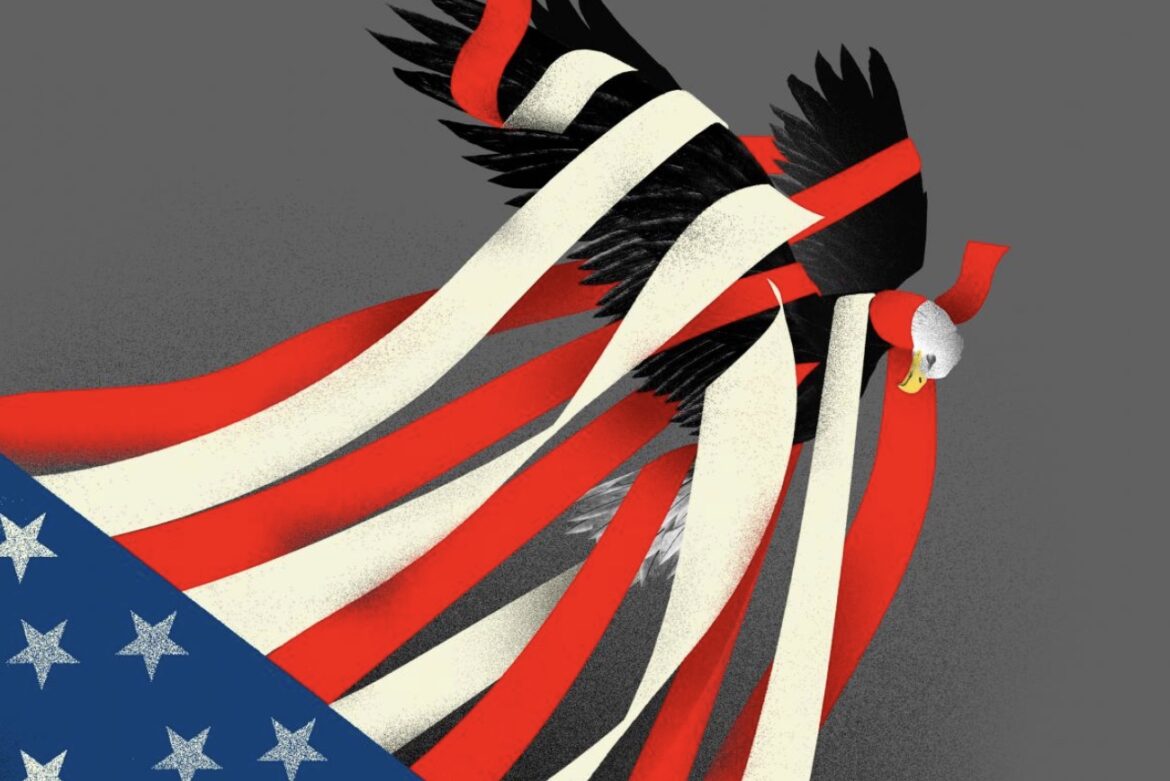
By: Sofia Marxuach, Haverford ’26; Image by Foreign Affairs
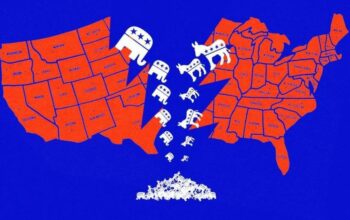
Trump’s international policies and constant indecisivenessness are making the United States unreliable to allies and weakening American power internationally. His policies are doing the exact opposite of “Making America Great Again”–they are Making America Weak.
There are two kinds of international power: Hard Power and Soft Power.
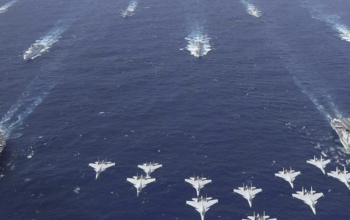
Hard power is described as using the military and economic strength of a nation to get the results one wants. Put simply: how many nuclear bombs a country has, how many weapons, its economic strength, et cetera. It is considered more coercive–it pushes actors to act a certain way.
Soft power, on the other hand, is the influence a nation has on another via foreign policy, culture, or political values –it pulls actors to act how you want. In other words, Hard Power is military and economic influence while Soft Power is a more subtle form of influence– described as ‘attraction’ by Joseph Nye, it relies on appearing as an attractive ally to incentivize other countries to act in your favor.
The Trump administration is diminishing American Soft Power and relying heavily on Hard Power. Cutting USAID, bashing allies in security conferences, exiting world organizations, and legally dubious attacks in the Caribbean Sea are weakening the United States’s influence abroad. The reputation of the United States is transforming from an upholder of the legal order to unpredictable, and possibly a legal liability.
The deterioration of American Soft Power is concerning because it limits American political influence. Even though it may take years for it to officially happen, cracks within alliances, isolation from the international stage, and recent studies showing a decline of the global image of the United States across the globe means that the perspective on American Influence across the globe is already shifting.
If the United States is seen as unpredictable, then its allies will not depend on it as much because of its newfound negative reputation. If the United States is seen as unhelpful, it will open the door for other nations to become helpful and to gain soft power. Such examples include China providing more aid to Myanmar than the United States ($14 Million versus $2 Million), and providing infrastructure development programs to South America. Even though these were material exertions of power, they allowed China to build its Soft Power by helping other countries–therefore appearing as a country that can be relied on. That makes it appear as a more attractive ally, and that reputation aids in Soft Power.
In an opposing example, the United State’s indecisiveness on how to manage the Russo-Ukraine War makes the United States seem unpredictable because the United States can’t seem to choose a side to support (and stick to it). This harms its Soft Power because it damages its reputation. The flip-flopping causes allies to question “if the United States can’t support one side, then how will we know the United States can consistently support other causes?”
We’ve already seen that allies are shifting closer to each other; if our allies can see a world without having to rely on the United States, then they can imagine a world where they don’t need the United States.
Another example is when the United States left the World Health Organization (WHO). A door for China to gain a bigger footing in the organization was opened. Even though Trump argued that the reason the United States left WHO was because of Chinese influence, the United States will no longer be able to stop China from gaining more influence because they left the organization. International Organizations allow for the development of Soft Power because they encourage building policies that are attractive to several actors that at the same time advance the primary policy creator’s interests within the organization. Leaving an organization removes an actor’s capability of developing policies to their favor and thus gaining Soft Power.
The United States’ withdrawal from these organizations creates a power vacuum for other countries to fill. The abandonment weakens the United State’s capabilities to use and develop Soft Power. There is no outlet to gain soft power from or to exert soft power to. It is like cutting off a bird’s wings and expecting it to fly.
As a result, China is now gaining more soft power around the world. It has more influence in WHO, it is exerting its power more freely because the United States is not there to stop it, and it is expanding its allies across the globe with several infrastructure programs.
Some may argue that cutting Soft Power is not that important because the United States still has Hard Power, and is relying more heavily on Hard Power. While it is true that the United States still has Hard Power, it can only be so influential because it is not something that can be used all the time. How will nuclear bombs help stop the child deaths caused by shutting down USAID? How will an aircraft carrier (that costs $7 Million a day to operate) help stop famine in Palestine ?
It can’t. Soft Power will. Via foreign policy, reputation, and the ability to connect with other countries. Soft Power can help stop violence by persuading actors to send aid and encouraging discussion.
What the United States needs to stay as a world hegemon is the Soft Power that it is now cutting. That Soft Power– funding disease research, reliable allyship, and policy that provides humanitarian aid– will help the United States keep its position in the world. By lending a hand to those in need and to its allies, the United States established its reputation as someone the world can go to for help. As Joseph Nye stated “…over the long term, soft power often prevails.”
The Trump administration is actively demolishing that reputation. The indecisiveness of the administration, being an inadequate ally, and participating in legally doubtful missions won’t help the United States be great; they will only chip away at the United State’s reputation.