By: Daniel Braun, Haverford ’27; Image by The Sun
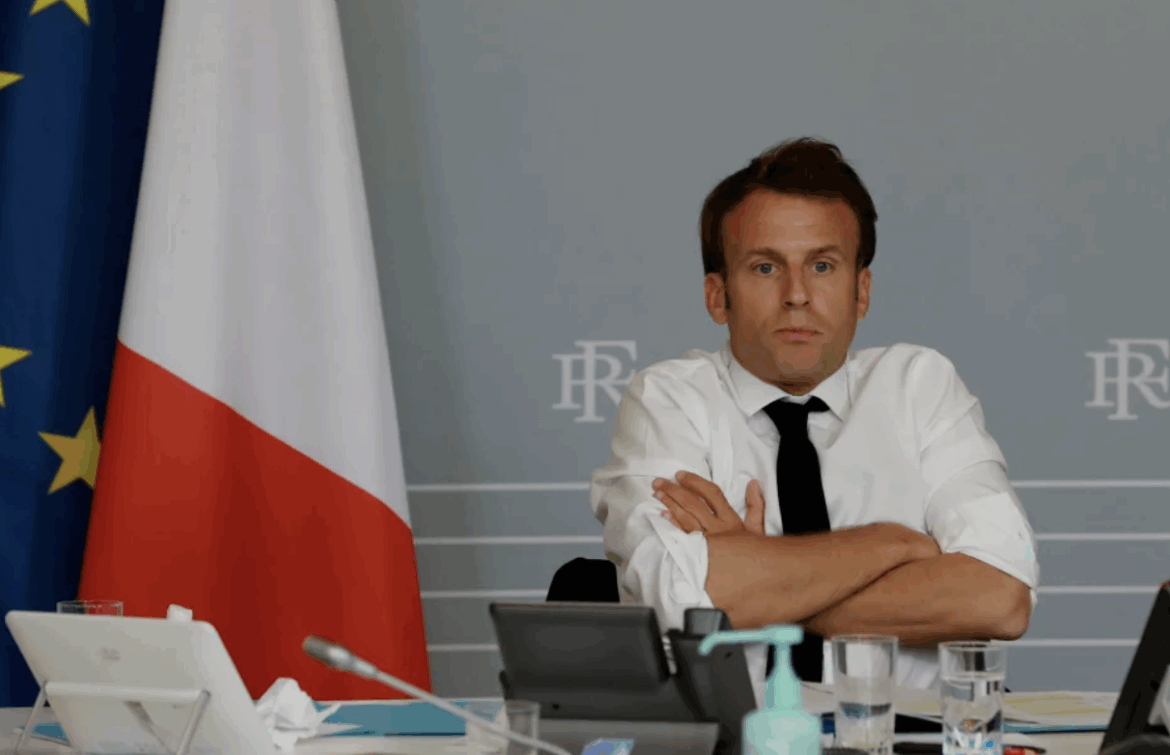
Earlier this Fall, the French Parliament voted 364-194 in favor of a no-confidence vote against Prime Minister François Bayrou. A no-confidence vote occurs when a majority of the lawmakers no longer have confidence in the Prime Minister and his government. A successful no-confidence vote, as in this case, triggers the prime minister’s forced resignation and that of his government. On September 9th, following the no-confidence vote, President Emmanuel Macron appointed Sébastien Lecornu as Prime Minister. However, Lecornu’s first cabinet unravelled rapidly: on October 6th, he announced his resignation, only hours after unveiling his new government, plunging France into a fresh political crisis. Just four days later, on 10 October, Macron re-appointed Lecornu to the post in an effort to stabilise the situation, underscoring the fragility of the current governing coalition and the broader challenge of institutional continuity. France’s no-confidence vote can be tied back to a broader pattern of political turmoil across Europe, where fragile coalitions, rising populist parties, and growing public frustration with traditional politicians are destabilizing governments. Just as Italy and Spain have cycled through unstable coalitions and Germany faces mounting pressure from the far-right AfD, France’s repeated government collapse underscores how the continent’s parliamentary systems are struggling to maintain legitimacy and stability.
Macron’s loss of his parliamentary majority in 2022 left France with a divided National Assembly, producing two failed governments within a year. The massive pension reform protests of 2023, which forced Macron’s government to bypass normal parliamentary procedure, further underscored the widening gap between citizens and their representatives. France is an example of Europe’s broader political turmoil. Other countries in Europe have also cycled through similar upheavals because of the disconnect between the representatives and represented.
Since World War II, Italy has experienced more than seventy governments, a level of turnover that reflects the weakness of centrist coalitions. In recent years, this instability created an opportunity for Giorgia Meloni’s far-right coalition, which consolidated power in 2022. Meloni’s rise demonstrates how populist movements can thrive when mainstream parties fail to maintain support. Spain has suffered similar turbulence. The country endured multiple inconclusive elections between 2015 and 2019, with Prime Minister Pedro Sánchez repeatedly forced to rely on fragile alliances to stay in power. The unresolved Catalan independence crisis continues to complicate governance, keeping Spanish politics fragmented and polarized.
Germany is not immune to the political chaos and is showing signs of similar stress. Former Chancellor Olaf Scholz led an uneasy coalition of the Social Democrats, Greens, and Free Democrats, but the alliance was deeply unpopular. Meanwhile, the far-right Alternative for Germany (AfD) has surged in the polls, threatening the postwar consensus around moderate governance.
Taken together, these cases illustrate that France’s instability is not a unique case. Instead, it is part of a broader shift that began in the aftermath of the 2008 financial crisis and deepened with the migration crisis of the mid-2010s. Across Europe, traditional parties have struggled to adapt to economic inequality, cultural polarization, and populist challenges. France’s repeated governmental breakdowns are therefore symbolic of a larger European crisis of governance. One in which fragile coalitions, weakened mainstream parties, and surging populist movements increasingly define the political landscape.