By: Ava Kwong BMC ’26; Image by BBC
Traditionally, modern counter-terrorism tactics have revolved around some sort of violence. Drone strikes, the capture of jihadi leaders, and other military-led operations have dominated the fight against extremism. While these strategies, known as “hard counter-terrorism,” have made some progress in weakening jihadi terrorist organizations, many scholars criticize this approach as the violence and destruction caused by counter-terrorism operations in the past (often involving the deaths of civilians as well as the destruction of civilian homes and communal spaces) have only helped to sway members of the general public against Western counter-terrorism initiatives and in turn leave them sympathizing with terrorist organizations.
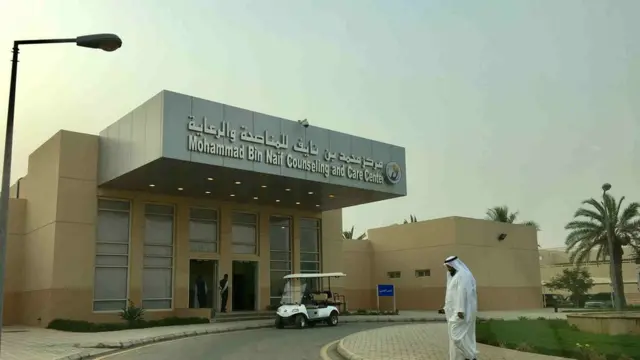
Due to how polarizing hard counter terrorist initiatives can be on civilian populations, a new approach quickly emerged known as “soft counter terrorism”. Soft counter terrorism emphasizes things like community engagement and improving human rights cases, in an attempt to break the cycle of terrorist recruitment and lead those who would fall into the trap of extremism, to a more fulfilling life. Established in 2004, a deradicalization initiative called Mohammed Bin Nayef Counseling and Care Center (MBNCC), was established in Saudi Arabia, with the goal of breaking away from more traditional counter-terrorism strategies and in turn, adopting the strategy of soft counter-terrorism. The group built a facility in the outskirts of Riyadh, in the hopes of combating radicalization and the push to extremism through counseling and psychiatric assistance. As of 2022 (the latest updated numbers available), the MBNCC has graduated around 6,000 men who were former members of jihadi terrorist organizations, most notably from al-Qaeda and its affiliates, and the Taliban. It is important to note that none of the men admitted to the MBNCC were convicted of war crimes, as the men who were convicted of serious offenses stayed in detention. The MBNCC is reported to have around an 80% success rate (detainees that returned to normal civilian lives post deradicalization), with supposedly only 15% returning to extremism.
The MBNCC follows a typical psychiatric rehabilitation facility structure, in which detainees live in pods (although with individual rooms) that connect to a common courtyard, with communal kitchens and living spaces. Given that there are only 200 spots available in the MBNCC facility, the living layouts are designed to mimic a typical small family home, as a way to better integrate detainees back into the life of an average citizen. The MBNCC boasts religious, psychiatric, and media programs that the detainees participate in, as well as programs including art therapy, classes on philosophy and literature, and a reading library dedicated to books on successful Saudi Arabians. These different aspects of the program are all part of a bigger objective within the center, of changing one’s understanding of violence and its relationship to daily life. In an article written by PhD student Sara Brzuszkiewicz following her visit to the MBNCC, Brzuszkiewicz writes that the center hopes to rewrite several beliefs commonly held by jihadis, most notably in a sign in the entrance to the facility that celebrates the work of police officers who died in the line of duty, and framing them as shahids (martyrs). In the jihadi world, shahids are typically those who have died for the sake of jihad, either from fighting or carrying out suicide missions and attacks. The MBNCC attempts to reframe the detainees’ understandings of what a shahid could be, expanding the definition to include regular citizens who have given their lives to save others and fostering a more nuanced and positive understanding of the term.
The MBNCC also incorporates the detainee’s family into the program, ensuring that the detainee has a stable place to return to, one which does not advocate or push for a turn back to extremism. The MBNCC further attempts to diminish recidivism rates by providing detainees and their families with funds and healthcare, as well as pushing detainees to find a wife and pursue higher education, and even helping to return detainees to jobs they held before they entered the world of terrorism.
As the detainees’ time in the program continues (typical stays are said to be around six weeks but there are no official figures), they are allowed more freedom, the ability to spend time with family and to attend social events, as a way to reintegrate them into society. Following their graduation from the MBNCC, detainees are expected to engage in a parole-like system in which regular checkups are mandatory to measure one’s progress post-deradicalization program, as well as their new level of threat to the rest of the community. This program helps to not only measure the success of the center, but also keep tabs on released detainees in the chance that they return to extremism.
The United States has cooperated with the MBNCC in the past, sending 137 Guantanamo Bay inmates to Saudi Arabia since the founding of the center, as Saudi Arabia has been one of the few Middle Eastern states willing and able to take in prisoners convicted of terrorism. According to a New York Times article from 2022, of the 137 Guantanamo Bay inmates released by the United States to Saudi Arabian control, 116 were able to rejoin society without issue, 12 were recaptured, and one still remains wanted. While these numbers are relatively promising, the MBNCC experienced one of their most high profile failures when former Guantanamo Bay inmate Said al-Shihri graduated from the MBNCC de-radicalization program in 2008, and traveled back to Yemen a free man, where he was seen at the founding of al-Qaeda in the Arabian Peninsula, as the new deputy amir later that year.
The fact that a graduate of Saudi Arabia’s deradicalization program returned to extremism and nearly immediately accepted one of highest positions of power in a newly declared jihadist terrorist organization, was a major blow to the reputation of the MBNCC. Many asked questions centered on efficacy: how do we measure the success of de-radicalization efforts? And can we successfully and honestly measure a certain detainee’s development in the program? Saudi officials working at the MBNCC combated a lot of the questions and criticism of the program from the general public, arguing that the staff in the facility keep consistent watch on the detainees through both virtual and physical security in the facility, as well as continuous psychiatric evaluations of each detainee to measure progress.
While the program is by no means perfect, the MBNCC does show great promise. In a counter-terrorism movement dominated by hard counter-terrorism that has seen most initiatives leading to destruction or worsening relationships with civilians, soft counter terrorist initiatives help to breathe a new breath of fresh air into the fight. The emphasis on psychological rehabilitation, religious reeducation and social reintegration offers a more humane alternative to hard counter-terrorism, and also reminds us that in order to combat terrorism effectively (and in a longer lasting way), we must not fight the product of terrorism, but the situations that fuel and perpetuate this violence.
Works Cited
Brzuszkiewicz, Sara. “Saudi Arabia: The de-Radicalization Program Seen from Within.” ISPI, June 2017. https://www.ispionline.it/en/publication/saudi-arabia-de-radicalization-program-seen-within-16484.
Hearne, Ellie B, and Nur Laiq. “A New Approach? Deradicalization Programs And Counterterrorism” International Peace Institute, June 2010. https://www.ipinst.org/wp-content/uploads/publications/a_new_approach_epub.pdf.
Porges, Marisa L. “The Saudi Deradicalization Experiment.” Council on Foreign Relations, January 22, 2010. https://www.cfr.org/expert-brief/saudi-deradicalization-experiment.
Rosenberg, Carol. “The U.S. Wants to Close Guantánamo. Could a Saudi Center Provide a Way Out?” New York Times, August 2022. https://www.nytimes.com/2022/08/13/us/politics/guantanamo-biden-saudi-arabia.html.