By Mahek Jhaver ’27; Image from NPR
In February of 2025, Germany held special snap elections following the collapse of Chancellor Olaf Scholz’s left-leaning coalition. In addition to the German economy, the main issue of this election was immigration and security. Conservative opposition leaders capitalized on a recent surge in jihadi attacks in Germany to garner support for their anti-migration campaign— a platform that led them to major gains in the election.
Since 2024, there have been at least 11 suspected jihadi attacks prevented or carried out in Germany, out of about 25 possible jihadi attacks in Europe. Other heavily targeted nations include France and Austria. While Islamist terrorist attacks had occurred sporadically in the preceding years, there has been marked threat increase: in 2015, 550 individuals in Germany were classified as dangerous Islamists, a number that rose to over 2,000 in 2025. Even just between 2023 and 2024, Germany’s Global Terrorism Index score rose from 2.82 to 4.75.
Successful attacks in Germany in the past year include: the May 2024 stabbing at an Anti-Islamism rally in Mannheim which killed 1 and injured at least 5 others; the August 2024 attack at a Festival of Diversity which killed 3 and injured 8; the December 2024 Magdeburg Christmas Market attack in which a car rammed into a crowd, killing 6 and injuring 299; the February 2025 Munich car ramming attack at a union strike that killed 2 and injured 39; and a February stabbing at Berlin’s Holocaust memorial that seriously injured a Spanish tourist.
Prevented attacks include: the April 2024 arrests of 4 teenagers who were allegedly radicalized online and planned an Islamic State-inspired attack on worshippers in churches and synagogues; the August 2024 arrests of 2 Islamic State supporters in Germany planning an attack near a parliamentary building in Sweden; a September 2024 plan to attack the Israeli embassy in Munich with firearms by a man in contact with the Islamic State; another September 2024 plan to attack army soldiers with a machete; a November 2024 plan to attack a local Christmas market in Elmshorn; and a December 2024 planned attack on the Augsburg Christmas Market by a man communicating with Islamic State operatives online.
While the Islamic State (IS) only claimed responsibility for the August attack on the Festival of Diversity, the Holocaust Memorial attacker intended to leave Germany to join IS. Additionally, the attackers in 6 of the prevented attacks in Germany were inspired by or in contact with IS. Although this shows that lone wolf terrorism is more substantial than IS-directed terrorist attacks, individuals in Germany have a clear interest in connecting with IS— which means the possibility of more IS attacks is high.
This rise in jihadist activity in Europe is largely attributed to the October 7, 2023 Hamas attack in Israel and its ensuing conflict. The Islamic State in particular is taking advantage of the grievances surrounding the Israel-Hamas war, spreading more propaganda and urging its followers to “target the Jewish presence” in the West. The IS Amaq news agency claimed, for example, that the August 2024 knife attack was carried out “to avenge Muslims in Palestine and everywhere” (Germany in the Jihadists’ Crosshairs). The network also encourages specific targets, including sporting events like the European Cup in Germany. In February of this year, IS frequently discussed Cologne’s annual Carnival celebration online— “One of the internet threats specifically refers to the day the street carnival kicks off, reading: ‘Cologne Carnival February 27 Alter Markt’”. While Cologne’s Carnival was not cancelled, the high threat risk required increased security measures from law enforcement. Unfortunately, surrounding German towns which usually held their own parades could not finance this level of security and therefore had to cancel their own celebrations.
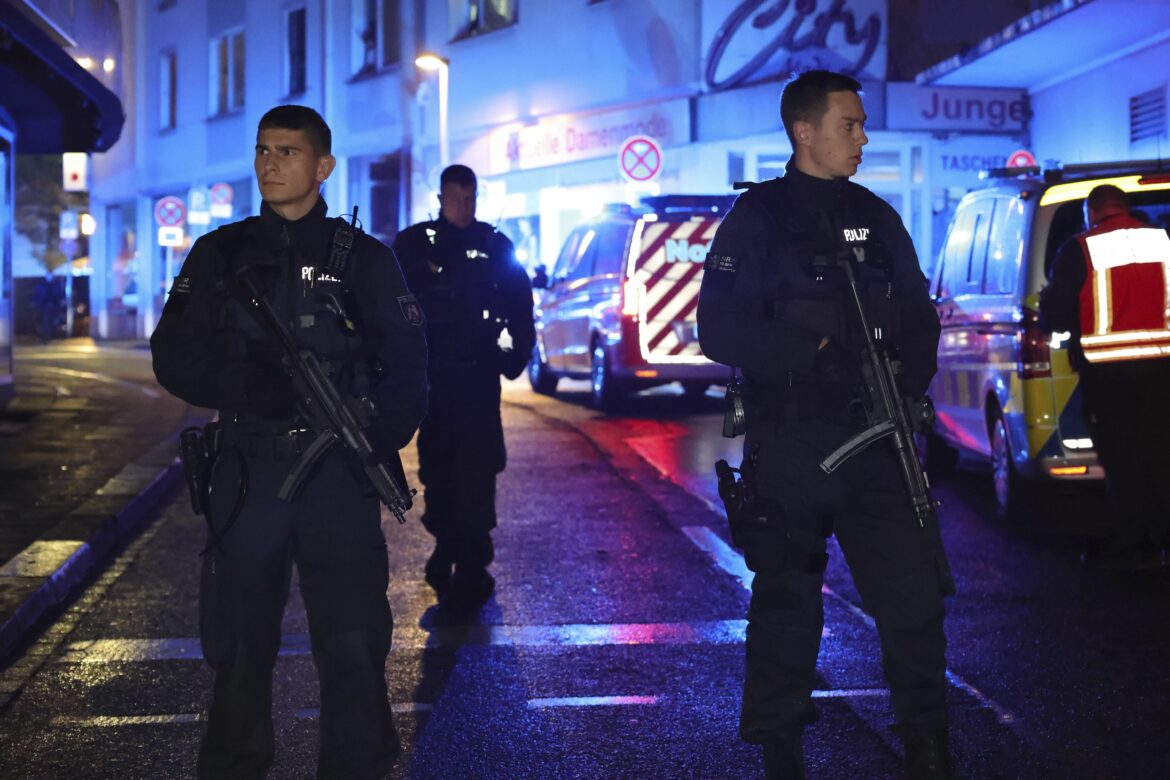
Given the frequency of attacks and the fresh wound of the Munich car attack, law enforcement and policy makers alike are prioritizing operational security. Germany’s membership in a coalition against IS, along with its considerable muslim population, make it a high-priority European target for IS. In response to this escalation in attacks, the country is fortifying its homeland security by strengthening border security, extending temporary checks, implementing stricter deportation measures, and using facial recognition. In response to terrorism in 2024, the government amended deportation laws to lower prerequisites for deportation, especially in cases in which “a foreign citizen incites hatred against sections of the population by publicly approving of or encouraging terrorist acts” or has “rewarded or approved of a crime which constitutes a terrorist act”. As attacks increase, counterterrorism measures are sure to escalate.
Interestingly, the attackers’ connections to the Islamic State are not being used to draw more attention to the Middle East or to encourage interventionist policies, but are instead being used as anti-immigration talking points. The public has been calling for stricter asylum and deportation policies due to the fact that many of the lone wolf attackers in the past year have been failed asylum seekers whose deportations were not carried out. With 3 attacks being carried out within two months prior to the vote, the conservative CDU/CSU, FDP, AfD, and BSW parties have heightened their rhetoric against migrants.
Politicians are even using some attacks that were not identified to have Islamist motives as evidence against migrants. For example, police determined that a September 2024 incident that injured 31 people and involved arson, car ramming, and a machete was the result of a mentally ill individual attacking his ex-wife’s new boyfriend. Yet conservatives insist that the Syrian man must have had Islamist motives due to the keffiyeh tied around his head and a pennant with the Palestinian colors. An attack at a German preschool by a failed Afghan asylum seeker was also determined by authorities to likely be linked to mental illness rather than jihadi radicalization, but the horrifying tragedy committed just one month before the election was used as anti-immigration rhetoric by right-wing party AfD. The right blames past high levels of migration for the perceived security failures that led to the execution of these violent attacks— and their claims are making an impact on public opinion.
The surge in terror activity around election-time caused some to question whether an outside party was attempting to influence the direction of the vote. The attacks often appeared “to coincide with dips in [the AfD’s] popularity”, leading German intelligence services to investigate the possibility that some attackers were influenced by Russia “with the ultimate goal of boosting support for the anti-immigration and pro-Russian, far-right Alternative for Germany (AfD) party” (Increased Terror Activity). The AfD did benefit from these attacks, as the public refocused on the issue of migration, a major part of AfD’s platform, after each instance. Given internal disagreement over Germany’s continued support of Ukraine, Russia has a vested interest in the outcome of German elections.
The Ministry of the Interior says that “possible indications of targeted influence from abroad” are being taken seriously but that there are so far “no clear indications” of such activity. A German TV broadcasting company found that Russian Google searches from days before the Mannheim knife attack included webcams for Mannheim’s market square and phrases “terror attack in Mannheim” and “Michael Stürzenberger stabbed”— the far-right activist who had been the target of the attack. A spokesman for the German Intelligence Service was skeptical of these claims, explaining that Google Trends results were not valid, were based on samples and searches that were too small, and could not get around VPNs that disguise the actual location of a search. Interestingly, fellow NATO members Poland and Lithuania have recently accused Russia of recruiting immigrants and refugees to commit acts of terror on their land.
While Russia’s interests may be compatible with those of the AfD, this compatibility is also, surprisingly, sometimes present between the Islamic State and the AfD. Jihadi groups see the West as a “gray zone”, where Muslims “ignore the fact that they live among non-Muslims” — a lifestyle that contradicts jihadi understanding of Al-wala wal-Bara, or loyalty and disavowal. Therefore, the Islamic State seeks “to highlight the distinctions between Muslims and the rest of the public”: an objective that the far-right certainly shares. IS knows that attacks in the West will increase Islamophobia and make the lives of Muslims in the West more difficult, possibly persuading them to immigrate to Muslim states or even commit terrorism in the name of jihad. Similarly, conservative parties capitalize on Islamophobia to promote their far-right policies. Although the IS and AdF are ideologically antithetical, they nevertheless benefit from one another to continue a cycle of violence and hate.
It is undeniable that conservative parties in Germany were able to use terror attacks to encourage anti-immigrant sentiment. The conservative CDU won the election with 28.6% of the vote, while AfD came in second with 20.8% of the vote— a 10.4% gain for the far-right party. Given that Germany’s domestic intelligence agency designated parts of the AfD as an extremist organization, these gains are a concerning indicator of the direction Germany is going in. One thing is for certain: if this surge in terrorist attacks in Germany continues, the AfD and its hardline approach to immigration will only garner more support.