By Zoe Woodruff BMC ’26; Image by UVA Frank Batten School of Leadership and Public Policy
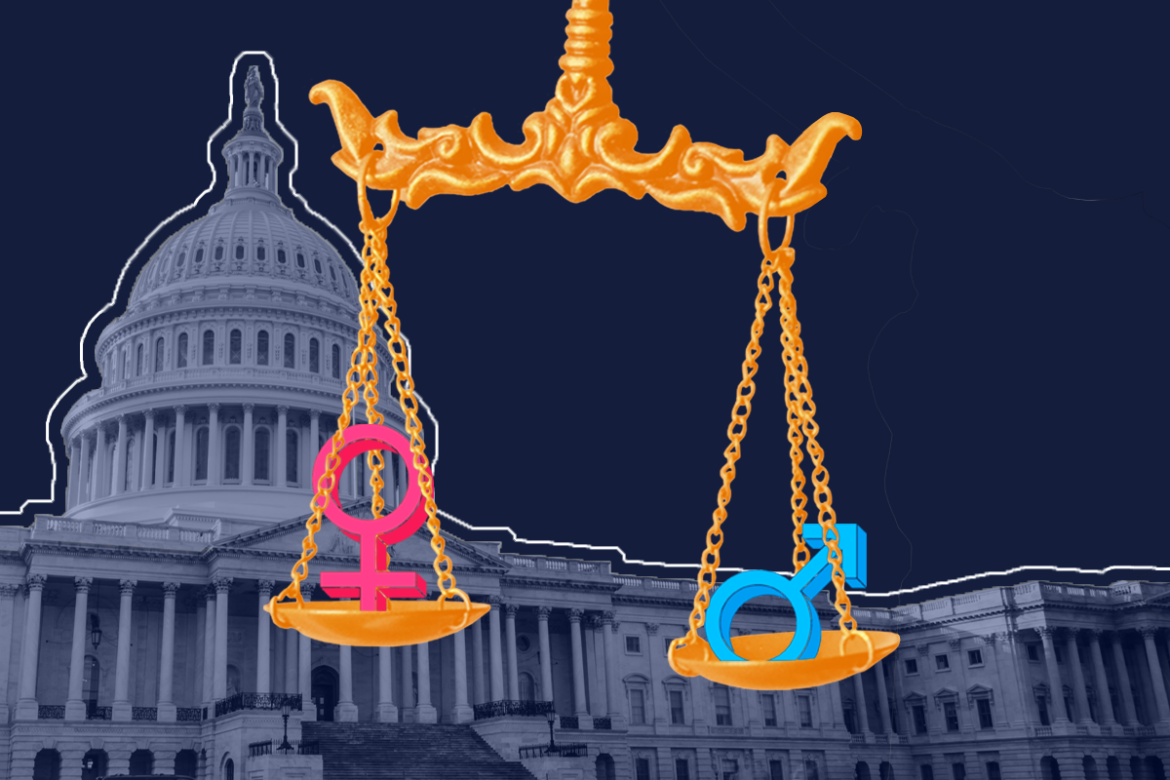
The 119th Congress hasn’t been sworn in yet, but one thing is already clear: there is a gender problem in the 119th Congress. For the first time in almost 20 years, the top spot on every one of the 17 congressional committees will be occupied by a white man. This is a huge step backward for women in the House. Three Republican women held committee chair positions in the 118th Congress, two of whom did not seek re-election this term, and one of whom had reached her six-year term limit as a committee chairperson and did not seek an extension. In 2018, 2020, and 2022 record-breaking numbers of women were elected to serve in Congress. The 2024 elections broke that streak, and the final number of women in the 119th Congress is 150 (including Representative Elise Stefanik, who if confirmed by the Senate will vacate her seat to become the U.S. Ambassador to the United Nations). This will fall slightly short of the current record of 152, and mean that women make up only 28% of Congress.
This stagnation in growth is concerning. Because of increased party polarization in the U.S., when women run for office, their gender has no significant impact on the outcome of their election. Some political scientists claim that this means that gender equality in our governmental institutions is just a waiting game. Incumbents have huge advantages in primary and general elections, and right now the vast majority of incumbents are men. As the men in these seats retire, they will be replaced by a more even distribution of men and women, and our institutions will be able to achieve gender parity. The problem with this argument is that in order for women to win elections, they first have to decide to run for office.
Women are, when compared to men with the same experience and qualifications, 20% less likely to have considered running for office, and less likely to have heard from friends or coworkers that they should consider running for office. There are many reasons that a woman might not want to run for office; women are often expected to carry the bulk of the domestic burden in their households and wouldn’t be able to travel back and forth to DC every week, and women are less likely to see themselves represented in the media as capable political leaders. These causes have all been explored at length in political science research. A more obvious but less easily researched cause, however, is the experiences of high-profile female politicians in the United States.
In the U.S., high-profile female politicians are harassed and attacked publicly in ways that their male colleagues are not. They are called vulgar names by their colleagues, often to their faces and in front of cameras, as Representative Alexandria Ocasio-Cortez was in 2020. Their opponents sometimes try to physically intimidate them, as Hillary Clinton experienced in the 2016 debates. Their congressional offices receive death threats and vulgar messages like those shared by congresswomen Jayapal and Talib. In the most extreme scenarios, they can be the targets of violent attacks, such as the shooting of Congresswoman Gabrielle Giffords in 2011, or the violent break-in to Speaker Nancy Pelosi’s house in 2022 that left her husband in critical condition. They face higher levels of scrutiny regarding their personal lives and as a result less substantive media coverage of their policy positions. On average, for every four paragraphs published on a male senate candidate’s issue positions, female candidates only got three. Even female candidates who are not high-profile figures are on the receiving end of online sexual harassment.
If we want women to want to run for public office, we must address the experiences of women who hold public office. Despite how the question is sometimes presented in political science research, it seems obvious fewer women than men would want to run for office when doing so, for women, means subjecting themselves to harassment and constant scrutiny, as well as subjecting themselves and their loved ones to a constant threat of violence. I argue that women, especially those highly qualified candidates who see the experiences of female politicians first-hand, do not run for office not because they do not see themselves as fit to do the job or out of a sense of domestic responsibility, but because the experience of high-profile female politicians is inherently undesirable.