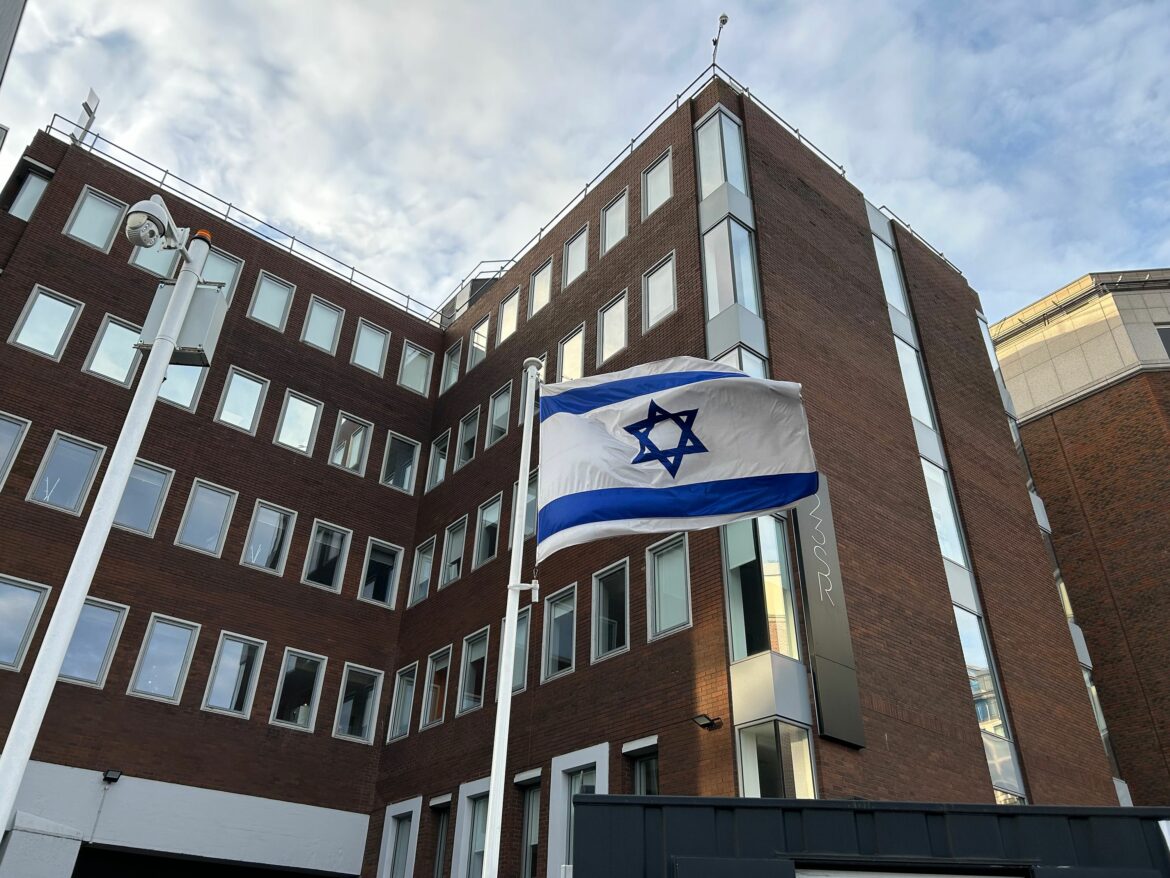
By Lily Buyer ’26; Image by CNN.
On December 15th, 2024, Israel announced plans to close its embassy in Dublin, citing what it described as the Irish government’s “extreme anti-Israel policies.” The decision followed Ireland’s announcement of intervention, supporting South Africa’s case against Israel at the International Court of Justice (ICJ) in the Hague. South Africa has accused Israel of committing genocide against Palestinians in Gaza, a charge that Israel passionately denies. Irish Taoiseach (head of government), Simon Harris stated: “Ireland wants a two-state solution and for Israel and Palestine to live in peace and security. Ireland will always speak up for human rights and international law. Nothing will distract from that.”
Interestingly, Israel has not closed its embassies in other countries such as Mexico, Egypt, and Spain, who also joined the ICJ petition. While Ireland is preparing for the closure of the Israeli embassy in Dublin, Irish Foreign Minister Micheal Martin emphasized that Ireland would maintain its embassy in Tel Aviv, as it continues to perform “important work.” Despite these reassurances, questions remain about the broader implications of this diplomatic rupture for foreign policy and international relations.
Ireland’s relationship with Israel has long been strained. For many years, Ireland was the only EU state without an Israeli embassy, with diplomatic relations handled through Athens until December 1993, when an Israeli embassy was finally established in Dublin. Ireland’s anti-colonial history and strong support for the Palestinian cause have shaped its foreign policy. In the 1980s, Ireland became the first EU country to officially endorse Palestinian statehood. Since then, it has consistently condemned Israeli actions in Gaza and the West Bank, describing them as violations of international law. Conversely, Israel has often accused Ireland of harboring a bias rooted in antisemitism, fueling diplomatic disputes.
Given the historically tense relationship between the two states, the closure of Israel’s embassy is unlikely to cause immediate, tangible harm. Ireland’s consistent criticism of Israel means their diplomatic relationship was already strained. The closure, therefore, does not represent a dramatic shift but rather a continuation of an uneasy dynamic. However, the move could carry broader implications, particularly if it inspires other EU countries to adopt more openly critical stances toward Israel.
This decision reflects a more assertive and transactional approach in Israel’s foreign policy. Israeli Foreign Minister Gideon Sa’ar framed the embassy closure as a part of a broader shift in diplomatic priorities, stating: “Israel will invest its resources in advancing bilateral relations with countries worldwide according to priorities that also take into account the attitudes and actions of these states towards Israel.” In line with this policy, Israel recently announced the opening of a new embassy in Moldova, signaling its intention to deepen ties with states it perceives as friendly.
By closing the Dublin embassy, Israel demonstrates a strategic pivot, fostering alliances with less contentious nations over managing deeply critical relationships. While this approach may consolidate support among like-minded allies, it risks further isolating Israel from critical voices in the EU and other international bodies. In the short term, the closure gives Israel some sense of control over framing the narrative surrounding its critics. However, it seems unlikely to yield substantive benefits. If anything, it may reaffirm Ireland’s pro-Palestinian stance and embolden similar positions within the EU.
Domestically, the decision has also faced criticism, including from Israeli opposition leader Yair Lapid who argued: “The decision to close the Israeli embassy in Ireland is a victory of anti-Semitism and anti-Israel organizations. The way to deal with criticism is not to run away but to stay and fight!” The embassy closure risks amplifying perceptions of Israel’s unwillingness to engage with critical voices, potentially leading to greater diplomatic isolation.
Beyond the Israel-Ireland dynamic, this decision reflects broader trends in Israel’s foreign policy: it highlights a shift toward transactional diplomacy and a focus on building “friendly” relationships. Israel’s willingness to publicly stand against states it perceives as hostile could set a precedent for handling global criticism. However, this approach may alienate countries that Israel might otherwise seek to persuade, limiting its ability to influence international discourse on issues like the Israeli-Palestine conflict.
In summary, while the closure of the embassy in Dublin is not a major geopolitical crisis, it signals important shifts in Israel’s foreign policy. The move reflects both a preference for strengthening alliances with supportive nations while disengaging from strained relationships, even at the risk of long-term diplomatic isolation. Whether this strategy benefits Israel in the long run remains to be seen, as it may hinder efforts to address criticisms collectively on the global stage.
Bibliography
- Ambrose, Tom. Bryant, Tom. “Israel to close embassy in Dublin over ‘anti-Israel policies’ after Ireland’s backing of genocide petition- as it happened,” 15 December 2024. Theguardian, https://www.theguardian.com/world/live/2024/dec/15/middle-east-israel-syria-gaza-lebanon-latest-live-news. Accessed 15 Dec. 2024.
- McCarthy, Hannah. “Why Israel is closing its embassy in Ireland and what will happen next,” 15 December 2024. TheIrishTimes.com, https://www.irishtimes.com/ireland/2024/12/15/why-israel-is-closing-its-embassy-in-ireland-and-what-will-happen-next/. Accessed 15 Dec. 2024.
- Frayer, Lauren. Al-Kassab, Fatima. “Why Ireland is one of the most pro-Palestinian nations in the world,” npr.org, https://www.npr.org/2024/03/14/1233395830/ireland-pro-palestinian.